Re-engaging existing audiences is more difficult than acquiring new ones. Many users disengage after an initial interaction due to timing, relevance gaps, or information overload. Digital brochures for re-engagement provide a structured way to reintroduce value without adding pressure, using browsing-led experiences that invite rediscovery rather than forcing action.
Unlike one-off messages or static assets, digital brochures for re-engagement support exploration, context, and continuity. They allow brands to reconnect with inactive users, cold leads, and past customers through content that feels useful and intentional.
What Re-Engagement Means in a Digital Context
Re-engagement focuses on restoring attention from audiences that already know the brand but stopped interacting. This stage sits between awareness and conversion, where relevance matters more than urgency.
Brands typically apply re-engagement to inactive subscribers, stalled leads, or past customers who have not returned. Channels often include email, retargeting ads, and sales follow-ups, but results vary when the experience lacks depth. Digital brochures for re-engagement add structure to these efforts by giving users a place to browse at their own pace, which supports renewed interest over time.
Why Traditional Re-Engagement Tactics Fall Short
Many re-engagement efforts rely on tactics that prioritize reach over experience. This limits how effectively attention can be regained.
- Email-only reactivation attempts: These often compete in crowded inboxes and rely on a single click to succeed, which reduces impact when interest is low.
- Static PDFs and landing pages: These formats present information linearly and discourage exploration, especially on mobile devices.
- One-off campaign assets: These lack continuity and insight, making it hard to learn what content actually re-captures attention.
These limitations explain why digital brochures for re-engagement are increasingly used as a complementary format rather than a replacement channel.
Why Digital Brochures Are Effective for Re-Engagement
Digital brochures are designed for browsing rather than immediate conversion. This makes them well-suited to audiences who are curious but hesitant.
- Visual, browsing-led experience: Strong visuals and structured layouts help users reorient themselves without cognitive effort.
- Encouraged exploration: Readers can move freely through content, which supports rediscovery instead of forced actions.
- Flexible funnel placement: Digital brochures for re-engagement work across awareness and consideration stages, not just near conversion.
This approach aligns with how disengaged users prefer to re-enter a brand relationship.
Re-Engagement Use Cases for Digital Brochures
Re-engagement scenarios vary by audience maturity and intent, but the format adapts well across use cases.
- Re-introducing a brand or collection: Helps inactive users understand what has changed since their last interaction.
- Highlighting updates or new arrivals: Focuses attention on what is new without overwhelming detail.
- Re-activating dormant leads: Supports lead nurturing by offering context instead of immediate sales pressure.
- Re-engaging past customers post-purchase: Reinforces value and encourages return visits through curated content.
Each use case benefits from the non-linear nature of digital brochures.
Key Elements of a Re-Engagement-Focused Digital Brochure
Effective re-engagement brochures balance clarity with restraint. Overloading content reduces the likelihood of renewed interest.
- Strong opening visuals and messaging: The first impression should signal relevance without relying on urgency.
- Curated content selection: Fewer, well-chosen sections perform better than exhaustive catalogs.
- Clear but non-aggressive CTAs: Calls to action should be available but optional.
- Logical flow that invites browsing: Structure matters more than volume in digital brochures for re-engagement.
These elements help readers stay engaged long enough to rebuild familiarity.
Using Personalization and Context for Better Re-Engagement
Personalization increases relevance when applied with restraint. Over-personalization can feel intrusive, especially for returning users.
- Segment-based brochure distribution: Content should reflect where users dropped off or lost interest.
- Alignment with past behavior: Highlight categories or themes previously explored.
- Avoiding generic messaging: Personalized digital brochures for customer re-engagement perform better when they feel intentional rather than automated.
Context-driven relevance improves the effectiveness of digital brochures for re-engagement without increasing complexity.
Interactive Features That Boost Re-Engagement
Interactivity supports attention by reducing friction between interest and action.
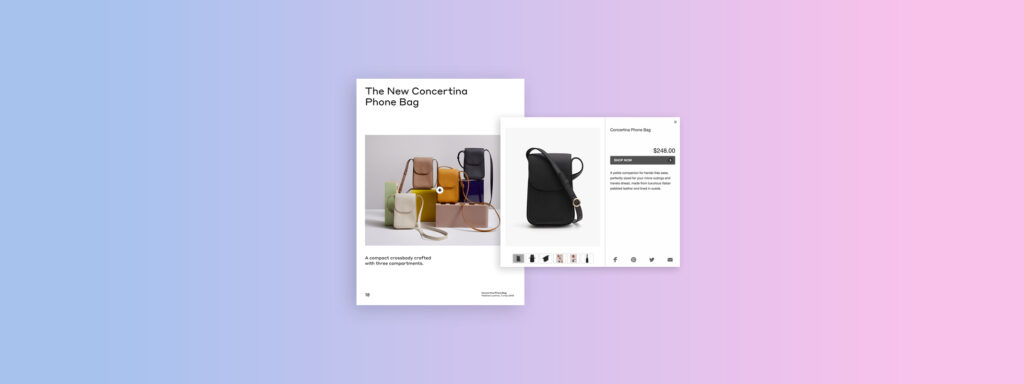
- Clickable product or content highlights: These allow users to explore details without leaving the experience.
- Embedded video or motion elements: Motion supports storytelling and increases time spent.
- Clear paths from inspiration to action: Interactive brochure experiences shorten the gap between curiosity and follow-up.
Used selectively, these features strengthen re-engagement without distracting from the content itself.
Steps to Create a Re-Engagement Digital Brochure
A structured approach ensures the brochure supports reactivation goals rather than becoming another unused asset.
- Define the re-engagement goal and audience segment: This determines content depth and structure.
- Choose a platform that supports interactivity and analytics: Tools such as Publitas enable tracking and iteration.
- Design content around rediscovery, not selling: Focus on relevance over promotion.
- Add interactive elements such as videos, links, or forms: These support engagement without pressure.
- Publish through appropriate channels: Email, embeds, QR codes, and sales follow-ups extend reach.
- Track behavior and refine future campaigns: Digital brochures for re-engagement improve over time when insights are applied.
This process supports consistency across re-engagement campaigns.
Distribution Channels That Work Best for Re-Engagement
Placement matters as much as content when reconnecting with inactive audiences.
- Website banners and embedded placements: Capture returning visitors without interrupting intent.
- Retargeting and remarketing social campaigns: Pair well with browsing-led content.
- Sales and account-based follow-ups: Support conversations with shared context.
When aligned correctly, digital brochures for re-engagement act as a central asset across channels.
Measuring Re-Engagement Success With Digital Brochures
Re-engagement performance requires different metrics than acquisition campaigns.
- Time spent and interaction depth: Indicates renewed interest rather than passive opens.
- Repeat visits and assisted conversions: Shows whether the brochure supports return behavior.
- Page-level engagement insights: Identifies which sections recapture attention.
- Brochure engagement tracking data: Supports iterative improvements across campaigns.
These insights clarify how digital brochures for re-engagement contribute to long-term value.
Common Mistakes to Avoid in Re-Engagement Campaigns
Small execution errors can undermine re-engagement efforts.
- Overloading brochures with information: This increases drop-off.
- Pushing sales messages too early: Disengaged users respond better to context than offers.
- Using outdated or irrelevant content: Relevance drives return interest.
- Ignoring performance insights: Data should inform future re-engagement strategies.
Avoiding these issues improves consistency and results.
How Digital Brochure Platforms Support Re-Engagement
Platforms designed for reuse and measurement reduce friction for ongoing campaigns.
- Faster creation and updates: Timely content supports seasonal or event-driven re-engagement.
- Reuse across channels: One brochure can support multiple touchpoints.
- Consistent experience for returning users: Familiar structure improves comfort.
- Insight-driven optimization: Platforms help refine digital brochures for re-engagement over time.
This support makes re-engagement scalable rather than ad hoc.
Use Digital Brochures to Bring Audiences Back With Clarity
Re-engagement works best when value is clear and pressure is low. Digital brochures for re-engagement create space for rediscovery by combining structure, interactivity, and measurable insight. Teams using Publitas can publish interactive brochures, update content without redesign, distribute across channels, and understand what brings users back.
Book a demo to see how digital brochures can support re-engagement without adding noise.
Frequently asked questions
How do digital brochures help re-engage users?
Digital brochures support re-engagement by offering a browsing-led experience rather than a single call to action. This allows inactive users to explore content at their own pace, which rebuilds familiarity and interest more effectively than one-off messages.
Are digital brochures better than email for re-engagement?
Email works best as a delivery channel, while digital brochures work as the experience itself. When combined, email introduces the brochure and the brochure sustains attention through interaction and structure.
What content works best for re-engagement brochures?
Curated content performs better than exhaustive listings. Highlighting updates, changes, or relevant themes helps users understand why returning is worthwhile without overwhelming them.
How do you measure re-engagement success?
Key indicators include time spent, interaction depth, repeat visits, and assisted conversions. These metrics show whether attention is genuinely regained rather than briefly captured.
Can digital brochures be updated after publishing?
Yes. Most platforms allow updates without republishing or redistributing links. This makes digital brochures for re-engagement suitable for ongoing campaigns and iterative improvement.