Share article
The simplest way to send a catalog by SMS is to host it on a mobile-friendly web page and text the link to opted-in subscribers. Use SMS with a shortened link for broad reach, MMS for a visual preview, or WhatsApp Business for interactive browsing. Choose based on audience, catalog type, and platform.
| Format | Best for | Message limit | Typical cost per send |
| SMS + link | Broad reach, cheap, global | 160 characters per segment | $0.008 to $0.03 |
| MMS (image + link) | Visual products, richer preview | 1,600 characters plus media | $0.02 to $0.05 |
| WhatsApp Business catalog | International, interactive browsing | Native product cards, 30 items max | Varies by country and template |
| RCS | Android-first audiences, branded UX | Carousels plus rich media | From $0.0083 |
Verdict: For most ecommerce brands with 1,000 to 50,000 subscribers, SMS with a shortened link to a mobile-optimized web catalog is the best choice. It reaches every phone, costs the least, and needs no app.
This guide is for ecommerce marketers, retail brands with a subscriber list, and wholesale reps who share seasonal ranges with buyers. If you’re deciding how to send a catalog by SMS, 2 things matter: documented consent and fast mobile loading. Ignore the 98% open-rate figure, which measures display rather than reading: Klaviyo’s benchmarks report close to 10% click rate for flow-based texts.
Prep your catalog for SMS delivery
SMS is only a delivery layer. What arrives after the tap decides if the send earns a return. That makes per-channel prep the first step.
Why a PDF link kills your click-throughs
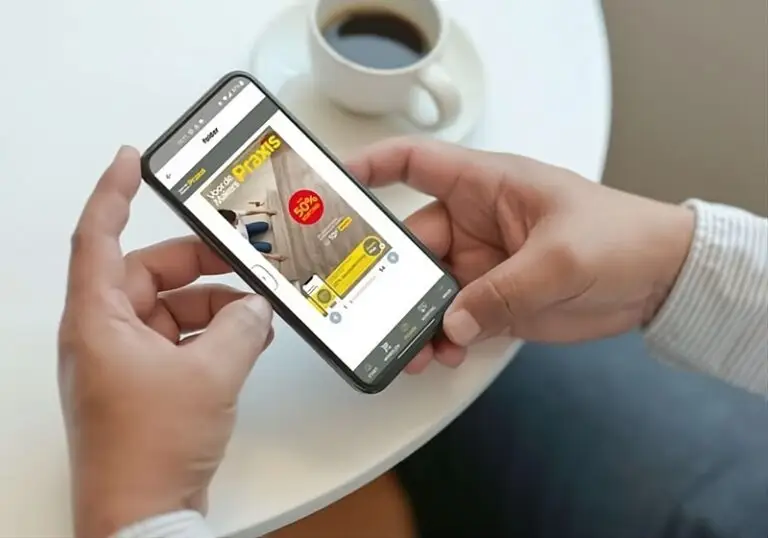
PDFs are heavy, slow on mobile data, display differently across iOS and Android, and force shoppers to pinch and zoom. In a roughly 3-second attention window, that friction can kill the click.
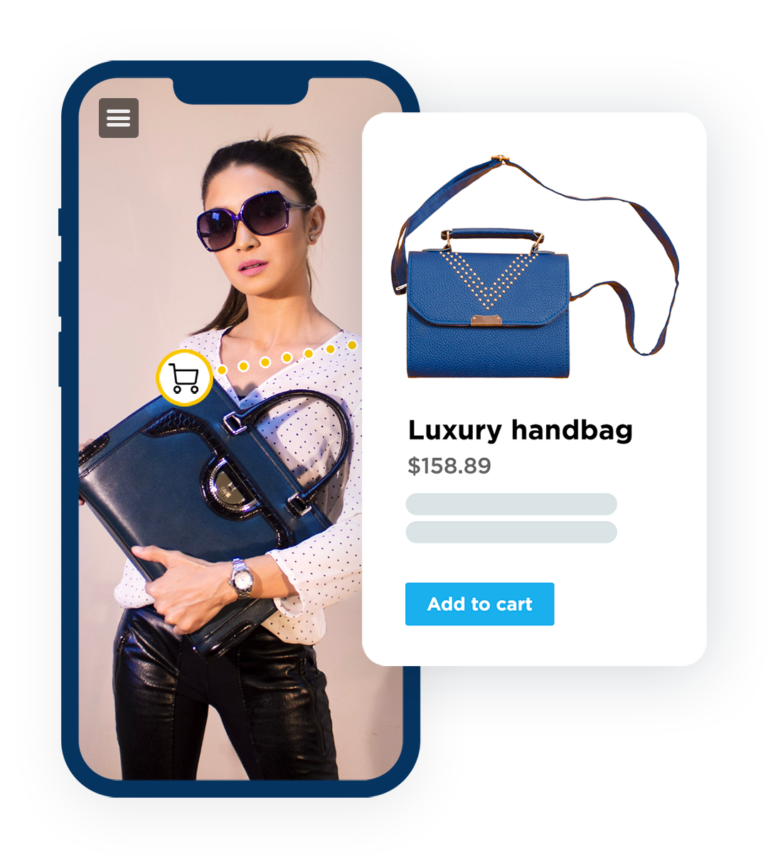
Send a web-native catalog instead. It opens in the browser, scrolls like a webpage, and lets shoppers tap products and buy. Publitas turns PDF catalogs into shoppable web versions with per-product links.
Page-level analytics show which spreads and products shoppers tapped.
The mobile catalog experience checklist
Check the catalog against 6 points. A mobile-first design is better than a print PDF adapted for phones.
- Loads in under 2 seconds on 4G.
- Scrolls vertically without pinch-zooming to read prices.
- Shows tappable products with prices visible before any tap.
- Offers direct add-to-cart or a checkout link.
- Works with no login and no app install.
- Has a clean, shareable URL that works with link shortening.
Test tap targets and load times on a real handset over cellular data, not desktop Chrome.
Pick your message format
The table at the top of this page shows the tradeoffs. In practice, SMS catalog marketing depends on 3 variables: cost per send, subscriber location, and whether you want an image preview or interactive product cards.
SMS with a shortened link (default choice)
An SMS segment holds 160 GSM-7 characters and works on every phone. Longer messages split into 153-character segments billed separately.
Use Bitly or a platform-native shortener to save characters and track clicks. Prefer your platform’s native shortener when available, and point the digital catalog SMS link at a permanent URL for the current catalog.
Twilio publishes US outbound SMS at $0.0083 per segment before carrier fees.
MMS with a preview image
An MMS catalog supports up to 1,600 characters plus a JPG, PNG, or GIF. Keep the image under 500KB because carrier limits vary. It works best for fashion, home goods, and food.
Use square or 3:2 lock-screen creative with high contrast and 1 readable product or headline. At Twilio’s current US base rates, MMS costs about 2.7x as much as SMS before carrier fees, so test it against plain text.
WhatsApp Business catalog messages
WhatsApp shows native product cards without an external link. Build the catalog in Meta Commerce Manager, connect it to your WhatsApp Business Account, and send through Twilio, Kaleyra, or Attentive.
A multi-product message carries up to 30 items across 10 sections. It works best in WhatsApp-first markets and for B2B buyers. Buyers need WhatsApp installed, while Meta verification and template approval add setup time.
RCS (a note, not a full section)
RCS supports carousels, verified branding, and read receipts. Apple added support in iOS 18, but carrier availability remains uneven. Test it for Android-heavy audiences; otherwise, use SMS or MMS.
Choose an SMS platform
Your platform handles consent capture, segmentation, scheduling, and reporting.
- Attentive: retail-focused, strong segmentation, custom quote with quarterly minimums.
- Klaviyo: best if your email lives there, billed on active profiles plus credits.
- Postscript: Shopify-native, fastest setup, published per-message rates, Shopify only.
- Twilio: lowest published per-segment rate, but you build the campaign layer.
Check the shortlist against 4 questions.
- Does it integrate with your ecommerce platform natively or through a connector?
- Does it handle opt-in capture, STOP handling, quiet hours, and 10DLC registration automatically?
- What is the true cost per send after you add platform and carrier fees?
- Can it segment on browse, cart, and purchase history, not just list membership?
Check pricing and support on G2 before you sign.
Get compliance right
Prior consent is generally required before a catalog SMS campaign is sent, although some markets allow limited existing-customer exceptions. Capture consent where shoppers already browse.
US promotional texts generally require prior express written consent. The TCPA allows $500 per violation, and courts may award up to 3 times that amount for willful or knowing violations.
In the UK, PECR applies alongside UK GDPR, with a narrow soft opt-in for qualifying existing customers. EU direct-marketing rules also allow a limited existing-customer exception under the ePrivacy Directive. India has DND and DLT rules, Canada has CASL, and Australia has the Spam Act.
Every message needs a clear opt-out path. “Reply STOP to opt out” is the US convention, and the FCC requires senders to honor reasonable revocation methods.
Keep US sends within the applicable quiet hours for the recipient’s location. If you use a 10-digit long code, register for A2P 10DLC before sending because unregistered long-code traffic can be filtered.
Craft the message that gets clicks
Lead with the value, not the greeting. “New arrivals: 40 pieces under $50” beats “Hi from Brand X.”
Use 1 call to action and 1 link.
Put your brand name in the first 20 characters so it shows in the lock-screen preview. Keep the message under 160 characters, since every extra segment adds cost.
Test personalization tokens such as first name or last-viewed category. Separately, Attentive’s 2026 message analysis found that top-performing content elements in offer campaigns lifted click-through rates by up to 10% and conversion rates by up to 12%.
The same dataset shows revenue per send is highest between 4 pm and 7 pm. Click-through is highest between 12 pm and 3 pm.
Segment before you send. When you send a product catalog via text to the whole list, you pay to reach subscribers unlikely to tap.
The real cost of SMS catalog campaigns
Estimate the cost for 10,000 US subscribers.
Messages: Twilio charges $0.0083 per SMS and $0.022 per MMS, so 10,000 sends cost $83 or $220 before carrier fees. WhatsApp also adds Meta template fees that vary by country and category.
Carrier fees: about $0.0035 to $0.005 per US long-code SMS, or $35 to $50 for 10,000 sends.
Platform fee: usage-based services may have no fixed fee; managed platforms usually price by plan or subscriber volume.
10DLC: $4.50 for low-volume brand registration, $15 for campaign vetting, plus $1.50 to $10 monthly.
Catalog hosting: varies by provider and traffic.
A first 10,000-message Twilio SMS campaign costs about $139 to $163 before hosting and add-ons.
Email costs less per send. Compare channels by cost per click and conversion.
FAQ
Can I send a PDF catalog by SMS?
Technically yes, as an MMS attachment, but PDFs load slowly, display inconsistently, and require pinch-zoom on phones. Send a mobile-optimized web catalog link instead.
How much does it cost to send a catalog by SMS?
SMS typically costs from under 1 cent to about 3 cents per send and MMS 2 to 5 cents, before carrier fees. For 10,000 subscribers, messages alone cost a few hundred dollars; add platform and 10DLC fees.
What is the character limit for a catalog SMS?
A GSM-7 SMS segment holds 160 characters, or 70 with an emoji. Longer messages split into 153-character segments billed separately. MMS allows 1,600 characters plus media, so use a shortener to preserve CTA space.
Do I need consent to send catalogs by SMS?
Consent is generally required before marketing catalogs by SMS, although some markets allow limited existing-customer exceptions. US promotional texts generally require prior express written consent, while UK PECR allows a narrow soft opt-in for qualifying existing customers. Every message needs an opt-out method. Document consent before deciding how to send a catalog by SMS.
Enjoyed this article?
Get the next one straight to your inbox.