
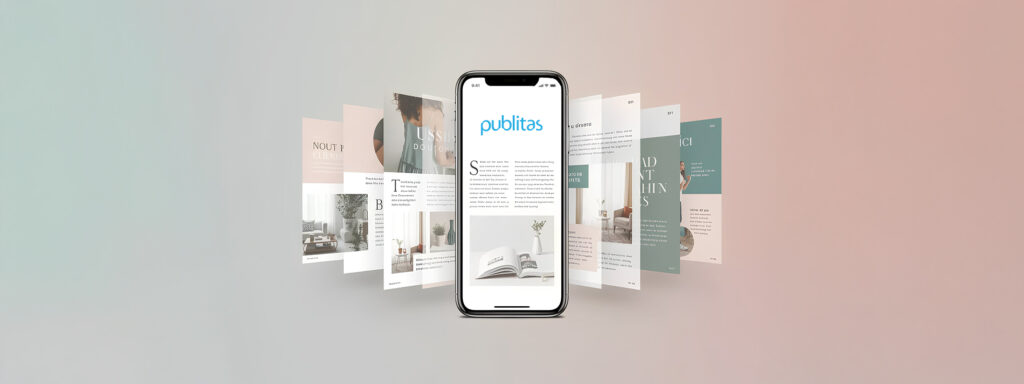
What exactly counts as a “digital magazine” today?
On the surface, it sounds simple: a screen-first publication that gathers long-form content in one structured place, with layouts tuned for mobile and desktop, intuitive navigation, and multimedia elements that guide readers through the story.
In practice, the term is all over the map. For some teams, a digital magazine is just a static PDF. For others, it’s a page-flip viewer that mimics print. Increasingly, though, it describes an interactive, browser-based experience—where navigation, media, and layout are purpose-built for screens instead of trying to replicate paper.
The common thread is the intent: a digital magazine groups related content into a single, cohesive publication that’s easy to access, easy to navigate, and easier to maintain than a full-blown site. It gives teams a structured way to package deeper content for readers who want more than a single article, without the overhead of building a complex web experience.
In the next sections, we’ll break down the main formats, how they work, and what people really mean when they talk about a digital magazine.
Types of Digital Magazines by Format and Technology
Digital magazines can be grouped by the core technology that powers them. This approach makes it easier to understand how each format behaves, what it supports, and how teams typically use it.
These categories represent the most common types of digital magazines in use today, each shaped by its underlying technology and the degree of flexibility, interaction, and control it supports.
Browser-Based (HTML5) Publications
Browser-based publications rely on HTML5, CSS, and JavaScript, which makes them flexible, responsive, and easy to access.
Standard HTML5 publications adjust to any screen and support interactive elements such as navigation layers, embedded media, and contextual links without requiring extra software. This makes them the most common foundation for multimedia magazines designed for modern browsing behavior.
Immersive web stories use the same technology but shift to a scroll-based, linear reading model with full-width visuals and narrative flow.
CMS-structured publications also fall in this category, presenting each article as its own HTML page and connecting them through internal links.
All three formats give teams control over layout, navigation, and performance because they are built directly for the browser.
PDF-Based Publications
PDF-based formats all start with a static file, but they differ in how that file is displayed or enhanced.
Interactive PDFs keep their fixed layout but add links or embedded media to extend functionality.
Embedded PDFs simply place the static document inside a webpage, making it viewable online without changing its structure.
Flipbook publications take the same PDF and present it inside a viewer with page-turn animations that mimic print. These formats remain tied to the original PDF’s layout, which limits responsiveness but provides a familiar, controlled structure.
While PDFs were once the default way to bring magazines online, they reflect a document-centric approach rather than a reader-centric one. They can still serve controlled distribution needs, but they lack the adaptability, interaction, and behavioral visibility expected from modern digital magazines built for continuous optimization.
App-Based Publications
App-based publications package PDF or HTML5 content inside a dedicated mobile or tablet app.
They operate within a closed environment and can offer features such as offline viewing or device-specific transitions.
For teams that distribute through app stores or need controlled access, this format provides a structured way to deliver long-form content on mobile devices without relying solely on a browser.
These formats differ in how they’re built, but the underlying technology is what shapes their strengths and limitations. Understanding these categories helps teams choose the right structure for their publication and the reading experience they want to deliver.
Recognising The Value of Digital Magazines
The value of digital magazines depends less on their visual presentation and more on whether they are built as digital-native systems or simple online replicas. Modern shoppers expect content built for the way they browse: fast, structured, and designed for screens. However, most brands only move to magazines to escape the costs of printing, without realising that there are a lot more opportunities that digital publications present.
- Reduced Costs: Digital production removes the need for printing, distribution, and storage. This reduces operational complexity and helps teams manage recurring releases more efficiently.
- Broad Accessibility: Advanced digital magazines function consistently across devices and geographies. Readers can access them through a browser or app, expanding reach without adding infrastructure.
- Enhanced Interaction: Multimedia, structured navigation, and interactive elements support deeper exploration. These features help readers move through content in ways static formats cannot.
- Measurable Performance: Analytics provide visibility into how readers engage with each section of a publication. Metrics such as time on page, navigation flow, and click activity offer insights unavailable in print or fixed PDFs.
These advantages only apply when teams adopt digital-native formats that support interaction, structure, and measurement. Static digital files or PDFs fall short, but advanced digital magazines give organizations the tools to understand how readers engage and refine content with purpose.
Where Digital Magazines Fit in a Content Strategy
Digital magazines support a defined set of strategic roles within a content ecosystem. They work best when the format matches how an organization structures, distributes, and maintains long-form content.
Replacing print with digital editions: Teams modernizing legacy print workflows use digital editions to streamline distribution and reduce production overhead. This approach keeps the familiar structure of a magazine but adds cross-device access and measurable engagement.
Producing publications exclusively for digital channels: Organizations that operate fully online create magazines designed only for digital consumption. Without a print version to mirror, teams can iterate quickly, use richer media, and publish on more flexible schedules.
Using both print and digital in a hybrid model: Some teams maintain both formats to serve different audience preferences. The digital version expands reach, supports mobile viewing, and offers a secondary access point alongside print.
Centralizing distributed content into a unified publication: Organizations with content spread across blogs, microsites, and landing pages use digital magazines to consolidate related material into one navigable environment. This simplifies discovery and creates a coherent experience for readers who prefer a guided path over isolated pages.
Offering a high-control alternative to standard web pages: Some teams use digital magazines when they need predictable layout behavior, controlled sequencing, and reduced dependency on CMS templates. The magazine format provides layout stability while allowing more editorial freedom than traditional webpage structures.
These roles show that digital magazines are most effective when used intentionally as structured environments for organizing long-form content. When aligned with the right strategic need, they provide clarity, consistency, and control within a broader content ecosystem.
How Modern Digital Magazines Work
Modern digital magazines operate as self-contained publications built for today’s reading habits. They run in a browser or an app, support rich media, adapt to any device, and provide the tracking capabilities teams need to understand reader behavior. In practice, this means modern shoppers engage with content through structured pathways rather than isolated pages, allowing teams to guide attention, pace information, and observe how readers move through a complete narrative.
Integrated Media Elements
Modern digital magazines integrate multiple media types within a single publication. Video and audio supplements bring interviews, demonstrations, or guided explanations directly into the layout, adding clarity without altering the underlying structure. Image galleries and animations create visual sequences that guide attention and help shape the flow of information. These media elements enhance the reading experience while keeping the core publication intact.
Interactive Navigation Components
Interactive components define how readers move through the content. Links and hotspots enable navigation within the publication or out to external resources, giving readers controlled pathways without adding complexity. Quizzes and polls provide lightweight input opportunities directly inside the experience. Together, these elements influence navigation behavior and keep readers engaged in a structured environment.
Responsive Display and Delivery
Digital magazines adapt to the realities of multi-device browsing. Responsive layouts built with HTML5 adjust automatically to different screen sizes, ensuring consistent reading patterns across desktop, tablet, and mobile. Browser-based delivery removes the need for extra software, allowing readers to open the publication anywhere. This responsiveness keeps the experience stable regardless of device or context.
Behavior Tracking
Measurement tools reveal how readers interact with the publication. Engagement metrics such as page views, navigation flow, and time on page show how readers move through the content. Device and access pattern insights indicate where and how the publication is consumed. These tracking capabilities help teams evaluate performance without altering the editorial design.
Together, these capabilities shift digital magazines from simple content containers to adaptive reading systems. They give teams control over how information is delivered, how readers move through it, and how engagement is measured, allowing the publication to function as a managed, data-informed environment.
Start Creating with Publitas
Teams exploring modern digital magazines eventually need a platform that supports structured, browser-based publishing while maintaining consistency across releases, teams, and regions. Without this foundation, even well-designed interactive publications become difficult to scale or maintain. Publitas helps organizations create digital publications that adapt to any device, support interactive elements, and offer the editorial control required for long-form content. Our platform also includes tools for branding, navigation, and analytics, making it easier to manage ongoing releases and understand how readers engage.
For organizations looking to modernize their publishing workflow or move beyond simple PDFs, Publitas offers a digital-first approach that aligns with today’s reading habits and operational needs.
Book a demo to see how Publitas supports the creation and management of interactive digital magazines at scale, without relying on static PDFs or rigid CMS templates.
FAQs
What is a digital magazine?
A digital magazine is a screen-first publication that organizes long-form content into a cohesive, multi-page format. The term originally referred to static digital replicas, but its meaning has expanded as publishing technology has evolved. Today, a digital magazine typically describes a structured online publication built for modern reading habits; often responsive, media-enabled, and capable of supporting interactive elements when needed.
How is a digital magazine different from a PDF?
A digital magazine offers a structured reading experience that can adapt to different screens and support interactive or multimedia elements when the format allows. A PDF, by contrast, has a fixed layout that cannot adjust to device context and offers limited navigation and no built-in analytics. While a PDF can serve as a basic digital publication, a digital magazine often provides more flexibility in how content is organized, displayed, and maintained online.
What formats can a digital magazine take?
Digital magazines appear in several formats, including HTML5 publications, interactive PDFs, flipbooks, app-based editions, immersive web stories, embedded PDFs, and CMS-based structures. Each format uses a different technical model for organizing content.
What features are included in a digital magazine?
Digital magazines include videos, audio files, galleries, animations, links, and hotspots. They also support search, tables of contents, responsive layouts, and tracking tools such as page views and click activity. These features collectively define the reading environment.
How do readers access a digital magazine?
Readers access digital magazines through browsers, mobile devices, or apps. Publications can be shared through direct links, embeds, or branded profiles. This structure allows access without specialized software.