Share article
Learning how to create an email newsletter that earns clicks starts with decisions made before the first template: who the newsletter serves, what it should drive, and how the team will measure it.
The eight steps below cover how to create an effective email newsletter that holds subscriber attention across issues and routes readers toward products.
What Is an Email Newsletter?
An email newsletter is a recurring email sent to subscribers who opted in to hear from a brand. Each issue delivers a consistent mix of content, such as new arrivals, seasonal edits, buying guides, or offers, on a predictable schedule.
A promotional email usually focuses on one offer or campaign, while a newsletter typically combines recurring content around a consistent theme or purpose.
For retailers, newsletters reach shoppers who are not ready to buy yet, keeping the brand present between purchases and giving browsers a reason to return to product pages.
How to Create an Email Newsletter in 8 Steps
To create an email newsletter that performs, work through eight steps: set the goal, choose a platform, build the list, plan content, design, write, test and send, then measure. Each step depends on the one before it, so early decisions shape later results.
1. Define Your Newsletter Goal, Audience, and Value Proposition
Start with one primary goal. An email newsletter strategy built around a single outcome, such as driving repeat visits to new collections or increasing traffic to weekly deals, gives every later decision a clear filter.
Next, define the reader. A newsletter for loyal repeat buyers needs different content than one for first-time subscribers who joined through a discount pop-up.
Then write the value proposition in one sentence that states what subscribers receive and how often. For example:
- “New arrivals and styling edits every Thursday”.
- “This week’s best deals, every Monday morning”.
This sentence doubles as sign-up form copy, so it should set accurate expectations.
2. Choose an Email Marketing Platform
Choose a platform based on your list size, ecommerce integrations, automation needs, deliverability tools, and reporting requirements.
Key criteria for retail teams include:
- Ecommerce integration that syncs product and purchase data for segmentation and revenue attribution.
- Segmentation and automation depth, including behavior-based triggers.
- Deliverability support, such as domain authentication setup and one-click unsubscribe.
- Reporting on clicks, conversions, and revenue per send.
- A pricing model, based on contacts or send volume, that stays workable as the list grows.
Choosing on price alone often forces a migration later, when list data and automations are harder to move.
3. Build and Grow a Permission-Based Email List
A permission-based list includes only people who explicitly agreed to receive your emails. Purchased or scraped lists generate spam complaints, which mailbox providers weigh closely in inbox placement.
Effective capture points match the value proposition to the shopper’s context:
- Checkout opt-in for existing customers.
- Website sign-up forms tied to a clear subscriber benefit.
- In-store sign-ups at the register or through QR codes.
- Gated content such as buying guides or size charts.
Double opt-in asks new subscribers to confirm their email address through a follow-up message. This helps verify that the address is valid and that the subscriber intended to join the list.
US senders also need CAN-SPAM basics in place. The FTC requires commercial emails to include a valid physical postal address and a working opt-out, and opt-out requests must be honored within 10 business days.
4. Plan Your Newsletter Content, Format, and Frequency
An email newsletter content strategy defines what each issue contains, how it is structured, and how often it arrives. Planning all three together prevents filling slots with whatever is available that week.
For content, build three or four recurring pillars that support the goal. A home retailer might rotate new arrivals, room inspiration, a how-to guide, and current offers.
For format, most retail newsletters follow one of three structures:
- Curated digest: several short blocks linking to different products or categories.
- Single feature: one collection or guide with a focused CTA.
- Catalog-led: an issue built around a seasonal catalog or lookbook.
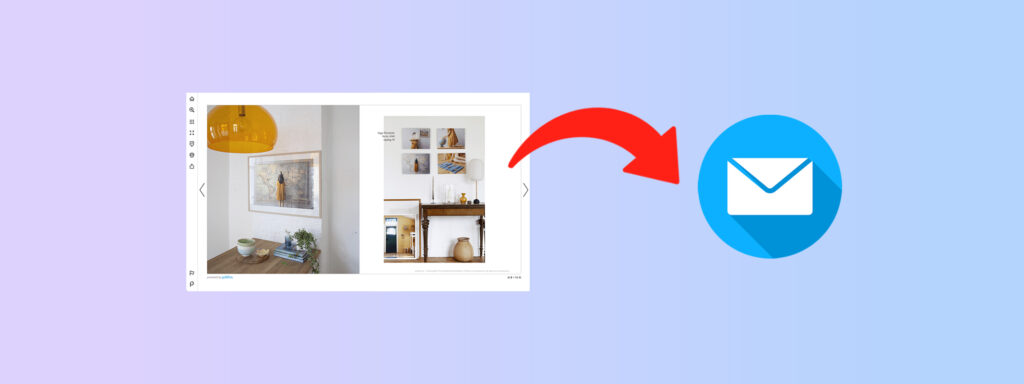
In catalog-led issues, the link destination matters as much as the email. Sending readers to the first page of a full catalog adds steps, while linking to the exact page featured in the email shortens the path to product detail.
Retailers publishing shoppable digital catalogs with Publitas can link newsletters to individual catalog pages and pass the newsletter through as the traffic source in their analytics, keeping attribution intact from inbox to store.
For frequency, choose a cadence the team can sustain with quality content. Thin weekly issues teach subscribers to skip the email. State the cadence at sign-up and hold to it.
5. Design the Newsletter for Readability
Readable design lets subscribers scan an issue in seconds and find the one item worth clicking. This is the stage where teams working out how to create an email newsletter most often overbuild.
When designing an email newsletter, start with the mobile view and then test the layout across the major email clients your subscribers use.
Design choices that support fast scanning:
- A single-column layout that stacks cleanly on small screens.
- A clear hierarchy, with the most important item placed first.
- One primary CTA per section, styled as a button.
- Product images that link directly to product pages.
- Live text for prices and key details, since images can be blocked or fail to load.
Keep the file size in check. Gmail clips messages with HTML larger than roughly 102KB and hides the remainder behind a link, which can cut off CTAs placed near the bottom of long templates.
6. Write the Subject Line, Content, and CTA
The subject line earns the open, the content earns the click, and the CTA directs where that click goes.
Each element should serve the goal set in Step 1.
Write the subject line and preheader as a pair. The subject line states the main value, and the preheader adds supporting context. Mobile inboxes truncate long subject lines, so place key words first. The subject line must also reflect the content, since CAN-SPAM prohibits deceptive subject lines.
In the body, lead with the item most relevant to the segment. Keep the copy short and specific by naming the product, the benefit, and the reason to act now.
For CTAs, replace generic labels such as “Learn more” with action-specific text such as “Shop the fall edit” or “See this week’s deals.” Specific CTAs set expectations for the destination page and give screen reader users meaningful link context.
7. Test, Check Deliverability, and Send Your Newsletter
Testing and deliverability checks confirm that the newsletter renders correctly and reaches the inbox.
Before each send, run a standard pre-send check:
- Preview the issue across major email clients and devices, including dark mode.
- Click every link and confirm tracking parameters are in place.
- Check personalization fields for blank or broken values.
- Confirm alt text on key images.
Deliverability also depends on sender setup. Google requires all senders to authenticate with SPF or DKIM. Senders reaching 5,000 or more messages per day to personal Gmail accounts are subject to additional requirements, including SPF, DKIM, DMARC, and one-click unsubscribe for marketing and subscribed messages.
For sending timing, test instead of copying general benchmarks. Split the list across two send times over several issues and compare click and conversion results.
8. Measure Newsletter Performance and Improve Future Issues
Measure newsletters by clicks, conversions, and revenue per send, and treat open rates as directional only. Apple’s Mail Privacy Protection preloads email content whether or not a subscriber opens the message, which inflates open data. Clicks are unaffected, so they remain a reliable engagement signal.
Track these metrics for every issue:
- Click-through rate by section and by link.
- Conversion rate and revenue from newsletter traffic.
- Unsubscribe and spam complaint rates.
- List growth by capture point.
Use section-level click data to refine content pillars. If the how-to guide consistently outperforms the deals block, test it in the lead position. Change one variable at a time so results stay comparable.
A newsletter is only as good as where its links lead. If those links point to a seasonal catalog, the catalog needs to be just as easy to act on as the email was: see how Publitas handles that half of the journey.
FAQs About How to Create an Email Newsletter
How much does it cost to create an email newsletter?
It can start at no cost. Most email platforms offer free plans capped by contacts or daily sends, and paid plans begin at a modest monthly fee that rises with list size or send volume. Design and content production add to the total as the program scales.
Can I automate my email newsletter?
Yes, most platforms support scheduled sends, reusable templates, and saved content sections, and retail teams can pull product data from a connected store into content blocks. A human review before each send is still needed to confirm pricing, offer timing, and message quality.
Should I segment my email newsletter subscribers?
Yes, once the list is large enough to support distinct groups. Segmenting by purchase history, category interest, or location lets each group see the most relevant products first. Start with two or three segments based on clear behavioral differences, then expand as results justify it.
How do I make an email newsletter accessible?
Use live text instead of text embedded in images, add alt text to every image that carries meaning, and keep text contrast at a ratio of 4.5:1 or higher. Structure content with headings in logical order and write link text that describes the destination. These steps also improve readability on small screens.
What should I do after sending my first newsletter?
Review click, conversion, and unsubscribe data within the first few days, then note which sections drew the most interest. Document what worked, adjust the next issue, and repeat the cycle. Learning how to create an email newsletter is the starting point, and consistent measurement is what improves it over time.
Enjoyed this article?
Get the next one straight to your inbox.