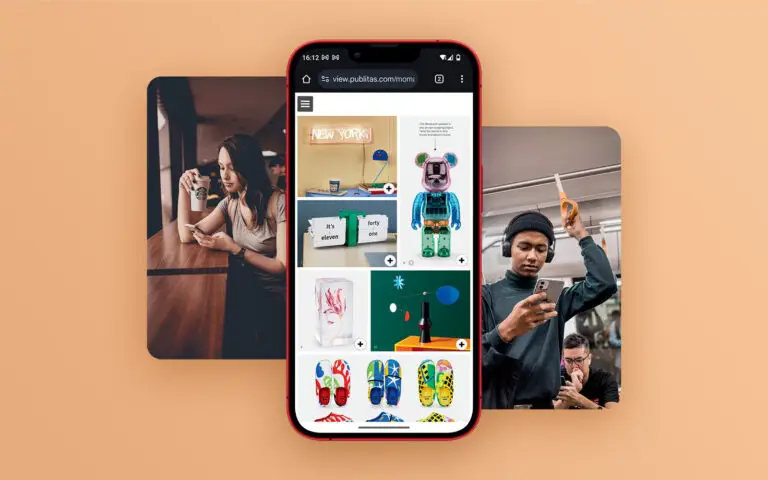

Retail teams still measure ecommerce and in-store sales separately, even as customers move seamlessly between both. The result is a visibility gap where digital influence drives decisions, but not attribution. Today, the buying journey starts on a screen, shaping intent long before checkout. If that influence is not measured, it is undervalued.
This blog breaks down what digitally influenced sales are, why they matter, and how to turn digital interactions into measurable retail growth.
What Are Digitally Influenced Sales?
Digitally influenced sales are transactions where digital channels such as websites, social media, or search engines shape the purchase decision before it is completed, often in-store. The key point is not where the sale happens, but what influenced it.
This behavior is widespread. Around 23% of US adults research products online but complete the purchase in-store, showing how digital discovery directly drives offline revenue.
This is why the metric matters. Measuring only ecommerce sales underrepresents digital’s real impact. When a shopper researches online and buys in-store, the sale is still digitally influenced, and strategies that ignore this path miss where demand is actually created.
Why Digitally Influenced Sales Are Reshaping Retail
Retail is no longer defined by where a purchase happens, but by what influences it. Digitally influenced sales reflect a shift where discovery, evaluation, and decision-making start long before checkout.
1. The shift from store-first to digital-first discovery
For decades, the physical store was the starting point of the shopping journey. Customers discovered products on shelves, interacted with sales staff, and made decisions in the aisle. That model has fundamentally changed. The storefront is now digital; it’s a search bar, a social feed, or a product listing page. Digital influence on retail sales now begins before a customer ever considers visiting a store.
2. Consumer behavior has permanently changed
Shoppers expect speed, relevance, and convenience across every interaction. They research through multiple digital channels, compare options in real time, and expect consistent experiences across devices and locations. This has raised the bar for retailers to deliver clear product information, personalized recommendations, and frictionless transitions between discovery and purchase. More importantly, 88% of shoppers now research online before making a purchase, regardless of whether that purchase happens online or in-store.
3. The scale of digital influence
Industry data reinforces the scale of change. Forrester estimates digitally influenced sales will represent 70% of total US retail by 2027, including $2.2 trillion offline and $1.6 trillion in ecommerce. Retailers that fail to align content with this behavior lose influence early in the decision process.
The New Retail Funnel: From Discovery to Store
The traditional retail funnel assumed awareness built through advertising, consideration happened in-store, and conversion happened at checkout. The modern funnel looks different. The traditional retail funnel assumed a linear path from awareness to consideration to purchase. That model has broken down. Today, digital influence on retail sales shapes discovery, evaluation, and purchase in a single, non-linear journey.
Awareness and consideration now happen across search, social platforms, retail media, and AI-driven experiences. This is how digital influences in-store sales. Shoppers validate choices online before completing purchases either digitally or in-store, often deciding before entering a physical location.
This shift is reflected in behaviors like ROPO, where customers research online, compare options, and build confidence before buying in-store. For retailers, digital content is no longer a support layer. It is the primary driver of purchase intent across channels, influencing decisions well before checkout.
Why Most Retailers Are Undervaluing Digital Influence
Most retailers undervalue digital influence on retail sales because they rely on outdated measurement models. Ecommerce and in-store performance are tracked separately, even though digitally influenced sales account for a significant share of offline revenue. This creates a gap where digital impact is visible in engagement but not in revenue attribution.
Siloed teams reinforce the issue. Marketing is optimized for direct attribution, while store sales are credited independently. As a result, how digital influences in-store sales remains underreported.
Consumer behavior has already shifted. Shoppers follow a “phygital” path, researching, comparing, and validating products online before buying in-store. Yet many retailers still treat these touchpoints as secondary.
The impact compounds over time. For every 100% increase in impressions, unit sales increase by 92%, creating a loop in which visibility drives demand. Without measuring this, retailers undervalue the true impact of digitally influenced sales.
How to Measure Digitally Influenced Sales
Measuring digitally influenced sales requires connecting digital engagement to actual purchase outcomes across channels. Understanding how to measure digitally influenced sales means linking interactions to revenue, whether the transaction happens online or in-store. The most widely used approaches include.
- Loyalty program linkage: When customers log in online and then purchase in-store with the same account or loyalty card, retailers can directly connect the digital touchpoint to the offline transaction. This is the most reliable attribution method for omnichannel retailers.
- CRM and email tracking: Tagging customers who click through an email campaign or catalog link allows retailers to monitor whether those leads later appear in-store purchase records, revealing which digital messages sparked offline behavior.
- UTM parameters and QR codes: Adding trackable parameters to catalog links, social posts, and digital ads, combined with QR codes in physical environments, creates a data trail that connects online interactions to offline visits.
- Point-of-sale and web analytics alignment: Comparing web analytics events (product page views, catalog interactions, “Get directions” clicks) against POS transaction data within defined time windows reveals the conversion pattern between digital interest and in-store purchase.
- Multi-touch attribution models: More sophisticated retailers deploy data-driven attribution that distributes credit across all touchpoints in a customer’s journey, rather than assigning it entirely to the last click.
What Drives Digitally Influenced Sales
Several digital channels contribute to the pre-purchase research phase. Understanding which ones are most active in your category helps prioritize where to invest.
- Search: Product-level queries signal high intent. Shoppers comparing models or checking availability are already in decision mode, making search visibility critical.
- Online reviews: Reviews act as a primary trust layer. Around 66% of shoppers say their purchasing decisions are frequently influenced by online reviews, making review quality and volume a direct driver of conversion.
- Social media: Discovery increasingly happens on social platforms, especially in fashion, home, and lifestyle. Even without direct purchase, these interactions build intent that converts later.
- Digital catalogs and lookbooks: Product-focused catalogs guide structured browsing. When shoppers engage with linked products, they move closer to purchase, regardless of where the transaction happens.
- Email and retargeting: These channels reinforce prior interest by resurfacing viewed products, extending consideration, and increasing the likelihood of conversion.
Where Digital Catalogs Fit Into This Shift
Digital catalogs sit at the intersection of content and commerce. They combine curated discovery with measurable interaction, helping shoppers evaluate products without the friction of grid-based browsing. This makes them a strong driver of digitally influenced sales, especially during the research phase.
- Curated discovery replaces grid overload. Digital catalogs organize products in structured layouts that help shoppers evaluate options more efficiently.
- Interactive elements support faster decisions. Shoppable links, video, and rich media reduce the gap between browsing and product understanding.
- Performance becomes visible. Engagement data, such as clicks, navigation paths, and conversions, connect catalog activity directly to outcomes.
- They connect physical and digital journeys. QR codes and mobile access allow shoppers to move seamlessly between in-store browsing and digital exploration.
- Content stays accurate and efficient. Real-time updates keep product information current while removing the operational burden of print.
Publitas is built for this model. It enables retailers to create shoppable, data-driven catalogs where every interaction contributes to a clearer view of product discovery, engagement, and conversion.
What the Future of Retail Actually Looks Like
The future of retail is phygital, where physical and digital operate as a single system. Physical stores remain essential, especially for high-consideration and experience-driven categories, but their role shifts. Discovery, comparison, and decision-making now happen digitally, making stores the final step in a journey shaped online.
Digital catalogs play a central role in this shift. They function as structured discovery layers where shoppers browse products, check availability, and build intent before visiting a store. This is where digital influence on retail sales is established, not at checkout, but during the evaluation phase. Stores evolve accordingly. They become validation and experience hubs, supported by digital tools that extend assortment, enable real-time access to inventory, and connect browsing to purchase. Retailers that integrate digital content, product data, and in-store execution will shape demand before it converts.
What Retail Teams Should Do Next
For retail and ecommerce teams, the priority is not adding more channels, but improving how existing ones drive outcomes.
- Audit your attribution model. If your team is reporting ecommerce sales and in-store sales as separate metrics without connecting them, you are missing the full picture of digital’s contribution. Build a shared digitally influenced sales metric that both online and physical teams own.
- Invest in digital channels that drive offline intent. Content-heavy digital assets, including product pages, digital catalogs, reviews, and comparison tools, are the primary vehicles for ROPO behavior. These deserve budget and optimization attention proportional to the offline revenue they influence.
- Make your catalog trackable. If your product catalog is a PDF, it is generating zero engagement data. Migrating to an HTML-based digital publication gives you page-level analytics, product click data, and a direct connection between catalog engagement and purchase behavior.
- Connect your loyalty program to digital channels. Loyalty data is the most reliable bridge between online research and offline purchase. If you can identify when a logged-in customer browses your catalog before visiting a store, you have a direct signal of digital influence.
- Align internal teams around a shared metric. The organizational shift matters as much as the technical one. When ecommerce and store teams share a digitally influenced sales target, digital investment stops being positioned as a threat to physical sales and becomes a shared lever for growth.
Finally, align teams around shared outcomes. When digital and store teams operate on unified goals, digital investment becomes a growth driver across the entire retail system. Make catalogs measurable and interactive. Moving from static PDFs to platforms like Publitas enables real-time analytics, product-level tracking, and interactive elements that reduce friction between discovery and decision
Conclusion
Digitally influenced sales require a shift from channel-based thinking to integrated measurement and execution. Retailers should unify attribution, invest in content that drives discovery, and use platforms like Publitas to make catalogs interactive and measurable. By aligning teams around a shared view of digitally influenced sales, businesses can reduce friction, connect digital engagement to in-store outcomes, and turn influence into consistent, trackable revenue growth.
FAQs
What are digitally influenced sales in retail?
Digitally influenced sales are transactions where a digital touchpoint, such as a product page, review, social post, email, or online catalog, played a role in the customer’s purchase decision, regardless of where the final transaction occurred. This includes both online and in-store purchases influenced by prior digital research.
How do you measure digitally influenced sales?
The most effective methods for measuring digitally influenced sales include loyalty program linkage (connecting digital logins to in-store purchases), UTM-tagged catalog and campaign links, POS-to-web analytics alignment, and multi-touch attribution models. The goal is to build a unified view of the customer journey across both online and offline channels.
What percentage of retail sales are digitally influenced?
By 2027, 70% of U.S. retail sales will be digitally influenced. This means digital experiences such as research, social media, and mobile interactions shape the majority of purchasing journeys, including both online and in-store decisions.
Why are digitally influenced sales important for retailers?
They represent the true scope of digital’s contribution to revenue. Retailers who measure only ecommerce sales underreport what digital investment actually drives. Understanding digital influence on retail sales enables better budget allocation, more accurate ROI measurement, and stronger alignment between teams.
What is ROPO in retail and why does it matter?
ROPO stands for Research Online, Purchase Offline. It describes shoppers who use digital channels to research products and then complete their purchase in a physical store. It matters because it reflects how many purchase decisions are formed before entering a store.
How can retailers increase digitally influenced sales?
Retailers can increase digitally influenced sales by investing in product-rich digital content, improving SEO and product page quality, building review volume, connecting loyalty data to digital channels, and using attribution models to measure what drives results.
Enjoyed this article?
Get the next one straight to your inbox.