Share article
Today’s shoppers have little patience for unnecessary steps. With endless alternatives just a click away, even minor obstacles can prevent a purchase. According to Baymard Institute research, nearly 70% of online shopping carts are abandoned, highlighting the cost of poor buying experiences.
For retailers, the ability to reduce friction with product purchases directly impacts conversion rates, revenue, and customer retention. This guide explores where barriers emerge across the buying journey and outlines practical strategies to reduce purchase friction through better product discovery, clearer information, and streamlined paths to checkout.
What Is Purchase Friction?
Purchase friction is any obstacle, delay, or source of confusion that slows a shopper down or prevents them from completing a purchase. Efforts to reduce purchase friction must account for the full journey, not just what happens at checkout.
Friction in the buying process can be technical (slow load times, broken filters), experiential (too many steps, unclear navigation), or informational (missing product details, no size guides). Each instance adds a small cost to the shopper’s effort, and those costs accumulate quickly.
Identifying and removing these barriers is one of the most effective ways to reduce friction with product purchases. When shoppers can evaluate products, find information, and complete transactions with minimal effort, retailers create a more efficient path to conversion.
Why Purchase Friction Hurts Revenue More Than Most Retailers Realize
Most retailers focus on traffic and acquisition while underestimating how much revenue is lost to friction further down the funnel. Understanding why it matters is the first step to systematically reduce friction with product purchases at scale.
Key ways purchase friction impacts revenue:
- Wasted acquisition spend: Retailers invest heavily in driving traffic, but friction during the buying process prevents many shoppers from converting.
- Checkout abandonment: Unexpected costs, forced account creation, and lengthy checkout flows create barriers at the point of purchase.
- Lower customer loyalty: Slow experiences, broken workflows, and unclear policies reduce trust and increase the likelihood of shoppers switching to competitors.
- Omnichannel disconnects: Inconsistent inventory, pricing, or product information across channels creates confusion and weakens customer confidence.
Friction often begins much earlier. Product discovery challenges can prevent shoppers from reaching the cart at all. Research from Constructor found that 44% of online shoppers spend at least three minutes searching for the products they want, creating unnecessary effort that weakens purchase intent.
For retailers operating across multiple channels, the impact multiplies. A frictionless shopping experience does not just lift conversion rates. It increases average order value, reduces bounce rates, and builds the trust that drives repeat purchases.
7 Proven Ways to Reduce Friction With Product Purchases
Reducing friction with product purchases requires removing the obstacles that slow shoppers down or prevent them from completing a transaction. The following strategies help retailers reduce purchase friction, improve conversion rates, and create a more seamless buying experience.
1. Make Product Discovery Faster
Shoppers who cannot find what they are looking for quickly will go elsewhere. One effective way to reduce friction with product purchases at the top of the funnel is to improve site search accuracy, add intelligent filters, and surface relevant products through personalization. For catalog-heavy retailers, consider whether your navigation reflects the way customers actually think, not just the way your internal taxonomy is structured.
2. Reduce the Number of Steps to Purchase
Every additional click between discovery and checkout is an opportunity for a shopper to leave. Streamlining the path to purchase means fewer form fields, guest checkout options, and eliminating redirects that break buying momentum. This is a direct way to reduce purchase friction where intent is highest. Review your checkout flow with fresh eyes. If completing a purchase requires creating an account, entering the same information twice, or navigating to a separate payment page, those are barriers worth removing.
3. Improve Mobile Shopping Experiences
Mobile users abandon carts at significantly higher rates than desktop shoppers. A shopping experience designed for desktop and retrofitted for mobile creates friction in the buying process at almost every touchpoint, from navigation menus to tap targets to checkout forms. A genuine frictionless shopping experience on mobile requires designing for thumb-based navigation, fast load times on cellular connections, and a checkout flow that works as smoothly on a small screen as on a desktop monitor.
4. Connect Inspiration Directly to Products
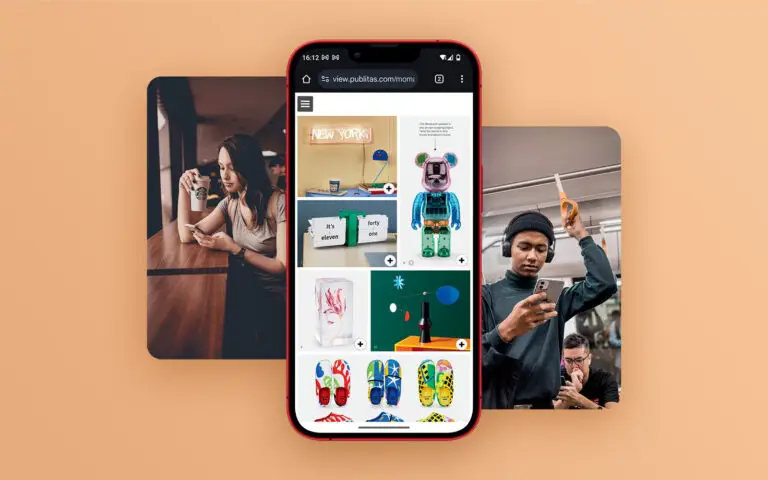
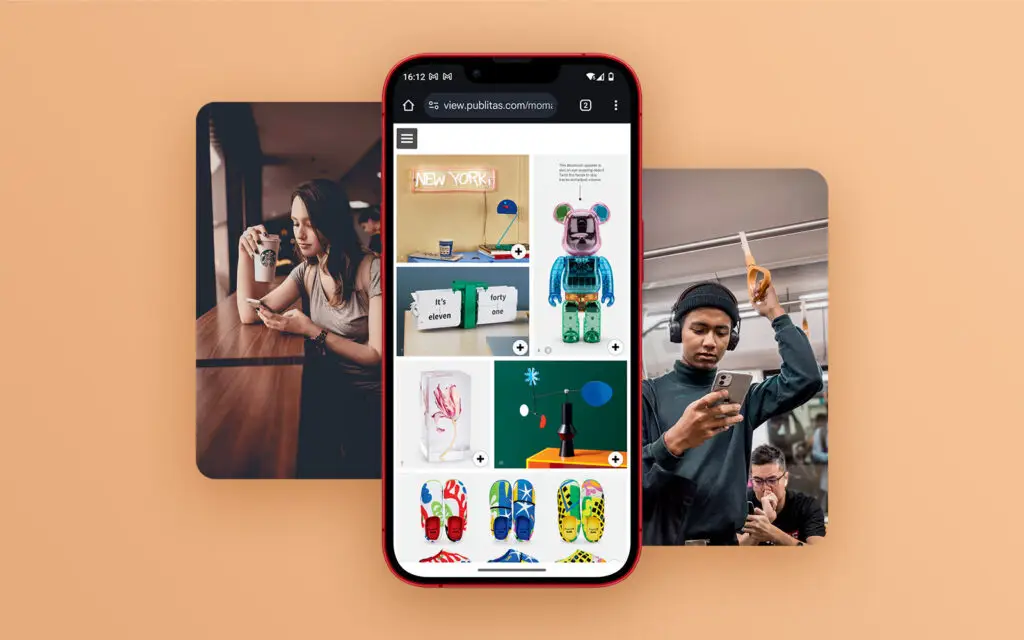
One of the most overlooked friction points is the gap between where shoppers discover products and where they can buy them. A shopper who sees a product in a catalog or campaign email and then has to search manually to find it on the site will lose purchase momentum fast. Shoppable content, where catalog spreads and campaign visuals link directly to product pages, eliminates this gap and is one of the most effective ways to reduce friction with product purchases for catalog-driven retailers.
5. Provide Clear Product Information
Uncertainty is a form of friction in the buying process. Shoppers who are unsure about sizing, materials, compatibility, or delivery will delay or abandon purchases. Complete product pages with multiple images, accurate descriptions, and visible shipping and returns information reduce that uncertainty. Reviews and social proof elements, such as ratings, user photos, and Q&A sections, provide the reassurance that converts consideration into a transaction.
6. Minimize Checkout Disruptions
Checkout is where purchase intent turns into revenue, making it one of the most important stages to optimize. An overly complicated buying process with too many forms, clicks, pop-ups, or unexpected requirements can frustrate shoppers and prevent them from completing their purchase. To reduce friction with product purchases at this stage, focus on transparent pricing, streamlined checkout flows, multiple payment options, and only the essential form fields. The easier it is for shoppers to complete a transaction, the less likely they are to abandon their purchase at the final step.
7. Create Consistent Omnichannel Experiences
Shoppers move between channels, browsing on social, researching on desktop, purchasing on mobile, and collecting in-store. Inconsistencies in pricing, availability, or messaging across these touchpoints create confusion that is difficult to recover from. A consistent strategy to reduce purchase friction treats every channel as part of a single connected experience. When a shopper picks up exactly where they left off, regardless of device or channel, the path to purchase shortens considerably.
How to Identify Friction in Your Product Purchase Journey
Before you can reduce friction with product purchases, you need to know exactly where in the journey friction is accumulating. These four diagnostic approaches will help you find it.
1. Review Customer Journey Analytics
Heatmaps, session recordings, and funnel analysis tools reveal where shoppers hesitate, drop off, or repeatedly backtrack. Look for pages with high exit rates relative to their funnel position; these are where friction in the buying process is concentrated.
2. Analyze Mobile vs Desktop Performance
Segment your conversion data by device type. A significant gap between mobile and desktop conversion rates is a strong signal that mobile-specific friction exists somewhere in the journey.
3. Evaluate Product Discovery Paths
Track how shoppers find products via search, navigation, category pages, or external links and compare conversion rates across those paths. Long search sessions with multiple refinements are a sign of discovery friction.
4. Gather Customer Feedback
Post-purchase surveys and exit surveys capture friction that analytics miss. Ask shoppers directly what almost stopped them from completing their purchase. Patterns in those responses point to systemic issues.
The Role of Digital Catalogs in Reducing Purchase Friction
For retailers who depend on catalog-driven commerce, such as fashion, home, furniture, and seasonal ranges, digital catalogs are a direct tool for removing the friction that exists between content and conversion.
1. Turning Discovery Into Action
Traditional print and static digital catalogs require shoppers to manually search for featured products. Shoppable digital catalogs add direct product links to every item, turning browsing into a one-click path to the product page and helping to reduce friction with product purchases at the discovery stage.
2. Eliminating Repetitive Searching
When catalog content is not connected to product pages, shoppers have to find products twice, once in the editorial content and once in site search. Shoppable formats remove that repetitive step entirely, which is a straightforward way to reduce purchase friction for catalog-first brands.
3. Creating Mobile-Friendly Shopping Experiences
Modern digital catalog formats are designed to be browsed on mobile, with swipeable layouts and tap-friendly interaction patterns. This extends a frictionless shopping experience to catalog-based discovery rather than limiting it to website navigation.
4. Connecting Marketing Content to Revenue Outcomes
Digital catalogs with embedded product links make it possible to track which catalog pages and spreads drive conversions, creating a measurable connection between editorial content and revenue.
With Publitas, retailers connect discovery to purchase through shoppable catalogs, reducing friction and creating measurable paths to conversion.
Where Purchase Friction Happens Before Customers Reach Checkout
Much of the focus on reducing friction centers on checkout, but significant friction exists earlier. Understanding where it accumulates before customers reach the cart is essential for any strategy to reduce friction with product purchases across the full funnel.
Discovery Friction
Discovery friction occurs when shoppers struggle to find relevant products. Poor site search, vague category structures, and limited filtering all contribute to this. It is often the first drop-off point for new visitors.
Navigation Friction
Complex or inconsistent navigation slows shoppers down and creates uncertainty. When menu structures are too deep, category labels are ambiguous, or breadcrumbs do not work reliably, shoppers lose confidence. Solving this is a direct way to reduce friction with product purchases before shoppers ever reach a product page.
Decision-Making Friction
Incomplete product information, a lack of social proof, and no clear comparison tools create decision-making friction. Shoppers who cannot quickly determine which product is right for them will either delay indefinitely or buy from a competitor who makes the decision easier.
Mobile Shopping Friction
Mobile-specific friction includes slow page loads, forms that are difficult to complete on small screens, and navigation patterns not designed for touch. Addressing this is one of the most impactful moves available to retailers looking to reduce friction with product purchases at scale.
Platforms like Publitas help retailers create shoppable digital catalogs that connect editorial and campaign content directly to product pages, removing the discovery and navigation friction that occurs before shoppers ever reach checkout.
Conclusion
Reducing friction with product purchases requires a journey-wide approach that removes barriers across discovery, evaluation, and checkout. Retailers that continuously identify and eliminate sources of effort can reduce purchase friction, improve conversion rates, and strengthen customer loyalty. The result is a frictionless shopping experience that supports both immediate revenue growth and long-term customer retention.
FAQ
What is purchase friction in ecommerce?
Purchase friction is any barrier, source of confusion, or unnecessary step that makes it harder for a shopper to complete a purchase. It includes poor product discovery, complex navigation, unclear product information, and checkout obstacles.
How can retailers identify friction points in the buying process?
Retailers can identify friction in the buying process by analyzing funnel drop-off data, comparing mobile versus desktop conversion rates, reviewing session recordings, and gathering direct customer feedback through post-purchase and exit surveys.
Does reducing purchase friction increase conversion rates?
Yes. Reducing unnecessary steps, improving product discoverability, and streamlining checkout all reduce the effort required to complete a purchase, which directly improves conversion rates and reduces cart abandonment.
What are the biggest causes of friction before checkout?
The biggest causes of pre-checkout friction include difficult product discovery, complex site navigation, insufficient product information, and poor mobile experiences. These issues often go unaddressed because they are less visible in standard analytics than checkout drop-off.
How do shoppable digital catalogs reduce purchase friction?
Shoppable digital catalogs embed direct product links within editorial content, eliminating the gap between discovery and the product page. This removes the manual search step that typically separates catalog browsing from purchase and creates a more direct, frictionless shopping experience for catalog-driven retail formats.
Enjoyed this article?
Get the next one straight to your inbox.