
Share article
Black Friday E-Commerce Stats at a Glance
The economic significance of Black Friday is increasingly visible in e-commerce data. US online sales continue to set records, digital channels are growing faster than stores, and Black Friday participation now extends well beyond the US.
These 7 statistics cover sales growth, channel shifts, shopper participation, product demand, discounts, digital shopping behavior, and Cyber Monday.
1. Black Friday E-Commerce Sales Reach Record Levels
US shoppers spent $11.8 billion online on Black Friday 2025, up 9.1% year over year, according to Adobe Analytics. It was the first Black Friday to surpass $11 billion in online sales.
For context, Black Friday online sales were $3.54 billion in 2015, according to Digital Commerce 360. In a decade, spending has more than tripled.
That trajectory explains much of the Black Friday economic impact today. The economic significance of Black Friday is no longer determined solely by a single day’s store sales. It sits inside a broader digital holiday season that generated $257.8 billion in US online spending from November 1 through December 31, 2025, according to Adobe’s holiday report.
2. Online Sales Are Outpacing In-Store Growth
For retailers asking why is Black Friday important to the economy, the channel split is one of the clearest signals.
Mastercard SpendingPulse reported total US Black Friday retail sales up 4.1% in 2025. E-commerce grew 10.4%, while in-store sales increased just 1.7%.
Shopper behavior supports the shift. NRF and Prosper counted 85.7 million online Black Friday shoppers compared with 80.3 million in stores.
For retailers, the economic significance of Black Friday increasingly depends on the digital experience. Product pages, mobile performance, merchandising, and promotional content now carry more of the campaign.
3. Black Friday Shopping Has Become a Global Phenomenon
The economic significance of Black Friday is no longer limited to a US retail event.
DHL’s 2025 research, covering 24,000 shoppers across 24 markets and 4,050 businesses across 19 countries, found 84% of online retailers planned Black Friday promotions.
DHL also found that 62% of Black Friday shoppers buy from retailers in other countries, according to its Black Friday research. That makes Black Friday and the economy increasingly international.
DHL also reported that 50% of shoppers globally trust Black Friday offers, compared with 74% in Poland and 73% in Italy. The economic significance of Black Friday therefore depends on reach, credible pricing, and clear promotional communication.
4. Electronics and Apparel Lead Black Friday Purchases
DHL’s global data shows electronics leading product demand, followed by clothing and footwear.
| Category | Share of Black Friday shoppers buying |
| Electronics | 37% |
| Clothing | 32% |
| Footwear | 26% |
| Home furnishings | 23% |
| Sport, leisure and hobby items | 22% |
| Cosmetics and beauty | 22% |
| Toys and games | 22% |
High-demand categories deserve more prominent placement, stronger product storytelling, and simpler navigation during the campaign.
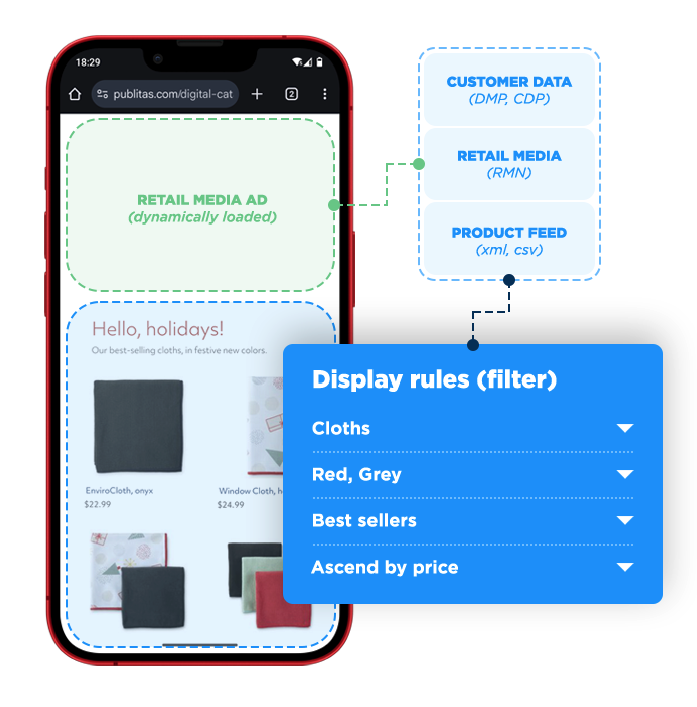
A recent guide to retail product discovery explains how curated collections and visual merchandising can help shoppers explore larger assortments. That approach fits Black Friday, when retailers need to surface priority products without overwhelming shoppers.
The economic significance of Black Friday is strongest when retailers connect category demand with clear product discovery.
5. Discounts Drive Black Friday Purchase Decisions
DHL found that 71% of Black Friday shoppers are motivated by discounts and savings, 49% by exclusive deals, and 44% by limited-time offers. Salesforce estimated the average Black Friday online discount at 28% in 2025, according to EMARKETER’s analysis.
These figures separate motivation from actual discount depth. NRF reported average holiday-related spending of $337.86 per Thanksgiving-weekend shopper, up from $315.56 in 2024, while Salesforce data showed US order volumes down 1% and average selling prices up 7%.
That distinction is central to the economic significance of Black Friday and to evaluating Black Friday and the economy. For retailers, the economic significance of Black Friday should be measured beyond headline revenue, with attention to margins, order volume, product mix, and the value created by each discount.
6. Mobile, BNPL and AI Are Reshaping Black Friday E-Commerce
Three trends now shape Black Friday economic activity online: mobile shopping, flexible payments, and AI-assisted discovery.
Adobe found that $6.5 billion, or 55.2%, of Black Friday 2025 online sales came from mobile devices, according to Digital Commerce 360. BNPL spending reached $747.5 million, up 8.9%, according to the same analysis.
AI is also changing discovery. Adobe reported an 805% year-over-year increase in AI-referred traffic to US retail sites on Black Friday, according to Digital Commerce 360. More importantly, AI-referred shoppers were 38% more likely to complete a purchase than visitors from other sources, according to Adobe’s AI analysis.
These shifts expand the economic significance of Black Friday beyond a retailer’s homepage. Shoppers may discover a product through an AI assistant, compare it on mobile, and choose BNPL at checkout.
That makes accurate product information and low-friction discovery increasingly important. A guide to e-commerce product catalogs focuses on structured product data, mobile-responsive layouts, interactivity, and measurement across the shopping experience.
7. Black Friday vs. Cyber Monday: Key E-Commerce Differences
Black Friday, Cyber Monday, Cyber Week, Cyber Five, and BFCM are related terms, but they do not describe the same thing.
Black Friday is the Friday after Thanksgiving, while Cyber Monday follows the weekend. In Adobe’s 2025 reporting, Cyber Week is the five days from Thanksgiving through Cyber Monday. That same five-day window is commonly called Cyber Five. BFCM refers specifically to Black Friday and Cyber Monday.
Adobe recorded $14.25 billion in Cyber Monday online sales in 2025, compared with $11.8 billion on Black Friday, according to Adobe Analytics. Black Friday grew faster year over year, at 9.1% versus Cyber Monday’s 7.1%. Cyber Week generated $44.2 billion overall.
Timing and device behavior add another layer to the economic significance of Black Friday. Black Friday peaked from 10 a.m. to 2 p.m. at $12.5 million per minute, with 55.2% of online sales on mobile, according to Digital Commerce 360. Cyber Monday peaked from 8 p.m. to 10 p.m. at $16 million per minute, while mobile reached 57.5%, according to Adobe Analytics.
This distinction matters when measuring the Black Friday economic impact. Black Friday is already included in Cyber Week totals, so retailers should not add the two figures together. Keeping the datasets separate gives a more accurate view of Black Friday economic activity and the economic significance of Black Friday.
What These Black Friday E-Commerce Stats Mean for Retailers
The economic significance of Black Friday translates into four practical priorities.
Communicate value clearly. Shoppers expect meaningful discounts, but trust is limited. Show the original price, discount, final price, and offer period clearly.
Simplify product discovery. Electronics, apparel, footwear, and home products attract substantial demand. Organize campaigns around the products shoppers are most likely to seek.
Prioritize mobile. More than half of Black Friday online sales now come through mobile devices. Product pages, promotional assets, and purchase paths need to work cleanly on smaller screens.
Distribute promotional content across channels. Shoppers move between search, social, email, AI tools, and retailer websites. Publitas helps retailers create and distribute shoppable digital publications across channels, while its guide to digital catalog analytics explains how teams can connect engagement with conversion and revenue.
For 2026 planning, the economic significance of Black Friday is clear: digital growth remains strong, demand concentrates around key categories, and discovery is becoming more mobile and AI-assisted. Retailers should treat the economic significance of Black Friday as a campaign-planning signal, not just a record-sales headline.
Turn your next Black Friday catalog into a shoppable experience. Try Publitas for free.
FAQs
When does Black Friday e-commerce shopping usually peak?
In 2025, US online spending peaked from 10 a.m. to 2 p.m., averaging $12.5 million per minute, according to Digital Commerce 360.
How far in advance do retailers typically start Black Friday promotions?
In 2025, Walmart’s first Black Friday event began November 14, according to Walmart’s announcement, while Amazon’s event began November 20, according to Amazon’s announcement, ahead of Black Friday on November 28.
How long do Black Friday e-commerce deals typically last?
Deals often extend beyond the day itself. In 2025, Amazon’s Black Friday Week and Cyber Monday events ran from November 20 through December 1, according to Amazon’s event details.
What is the difference between Black Friday and Cyber Week?
Black Friday is one day. In Adobe’s reporting, Cyber Week is the five-day Thanksgiving-to-Cyber Monday period, the same window commonly called Cyber Five.
How should retailers measure the success of a Black Friday e-commerce campaign?
Track revenue, conversion rate, average order value, units per transaction, margin, mobile performance, and product engagement. The economic significance of Black Friday depends on profitable demand, not revenue alone.
Enjoyed this article?
Get the next one straight to your inbox.