
Share article
AI implementation, hyperpersonalization, and real-time retail infrastructure are the key retail trends for 2026. From experimenting with AI to operationalizing it, retailers have made a transition at NRF 2026, as 40% of enterprise applications are expected to feature task-specific AI agents. Now, AI in retail 2026 concentrates on scaling up pricing, stock management, customer service, and product discovery automation. Retailers are also focusing on first-party data, supply chain resiliency, and personalization in retail to boost efficiency, retention, and long-term profitability, alongside immersive shopping experiences and retail media expansion. These retail trends for 2026 are reshaping how retailers approach growth and customer retention.
Why NRF 2026 Signals a Shift from Innovation to Execution
NRF retail industry trends 2026 showed a clear shift from AI experimentation to operational execution. Under the theme The Next Now, retailers focused on scaling technologies that deliver measurable ROI, improve operational efficiency, and strengthen profitability. It reflected a genuine industry inflection point.
According to reporting from the show, 48% of retail executives now report stronger customer engagement through conversational AI, and 37% cite more seamless omnichannel experiences as a direct result.
The biggest retail trends for 2026 are now tied directly to operational performance. AI in retail 2026 is now embedded into core functions such as dynamic pricing, demand forecasting, inventory management, and conversational commerce rather than isolated pilot programs. The event also highlighted growing investment in unified commerce infrastructure, connecting POS, eCommerce, inventory, and fulfillment systems into a single operational layer.
The shift also reflects a maturation in how retailers think about retail technology trends. The question is no longer which tools to evaluate. It is how to build the data infrastructure, organizational processes, and channel strategies that allow those tools to deliver consistent value across the business.
The 3 Retail Trends for 2026 That Matter Most
1. AI Becomes Core to Retail Decision-Making
AI remains one of the most transformative retail trends for 2026 for enterprise retailers. At NRF 2026, AI in retail 2026 moved decisively from a feature category to a operational layer. The most significant development was agentic AI, systems that do not just surface insights but act on them autonomously across pricing, inventory, and customer engagement. Walmart’s announced partnership with Google’s Gemini Universal Commerce Protocol, which standardizes AI capabilities for personalized shopping recommendations, was the headline example of this shift.
The market context supports the pace of adoption. The global AI in retail market reached $18.4 billion in 2026, and research suggests AI personalization delivers a 10 to 15% revenue uplift on average for retailers that implement it effectively. For most retailers, the gap is no longer technological access. It is execution capacity.
2. Real-Time Retail Infrastructure Replaces Static Workflows
Real-time execution is becoming one of the defining retail trends for 2026. A recurring theme across NRF 2026 sessions was the inadequacy of batch-based systems in a retail environment that now moves in real time. Inventory signals, pricing decisions, customer behavior data, and fulfillment triggers all need to respond to conditions as they change, not hours later.
Retailers discussed integrating live behavioral data, inventory feeds, and competitive signals into predictive models that can inform autonomous supply chain and pricing decisions. This is what separates retail technology trends in 2026 from earlier waves of digital transformation, the underlying infrastructure is now expected to be always-on and reactive, not periodic and manual.
3. Personalization Moves to the Core of Product Discovery
Personalization was a major theme at NRF 2025, but at NRF 2026 it was repositioned as a core function of product discovery retail rather than a marketing enhancement. Shoppers expect that browsing, search, and recommendation experiences reflect their actual preferences and intent. Retailers that cannot deliver this are losing ground at the discovery stage, before consideration even begins.
Research shows 76% of consumers prefer to buy from brands that personalize their experience, and 76% report frustration with impersonal interactions. For retail brands competing on digital merchandising, personalization is now the baseline expectation, not a differentiating feature.
Which Retail Trends for 2026 Will Drive the Most ROI?
Retailers prioritizing high-impact retail trends for 2026 are seeing faster returns. For most retailers, AI personalization and real-time infrastructure offer the clearest near-term return. AI-powered recommendations and dynamic content have a well-established impact on conversion rates, average order value, and customer retention. The investment case is shorter than it was even two years ago because the tools are more accessible and the implementation playbooks are more mature.
Personalization in retail also has compounding value. First-party data collected through personalized interactions becomes the basis for better targeting, more accurate demand forecasting, and more effective digital merchandising. Retailers who activate their customer data early build a compounding advantage that is difficult for late movers to replicate quickly.
Real-time infrastructure has a longer payback period but broader impact. The retailers at NRF 2026 who demonstrated the most advanced AI capabilities were those who had invested in unified data systems two to three years earlier. The ROI from that infrastructure investment is now visible across every layer of their operations.
See how interactive catalogs can improve product discovery and conversion with Publitas.
What These Trends Mean for Retailers (Strategic Implications)
1. Shift from Campaign-Based to Always-On Retail Execution
Traditional retail planning operates in campaign cycles including seasonal promotions, periodic price reviews, and planned content refreshes. The retail industry trends 2026 at NRF point toward a fundamentally different operating model. Pricing, content, and product recommendations need to update in response to real-time signals rather than on fixed schedules. Retailers still running campaign-based workflows are creating structural gaps that AI-native competitors will continue to exploit.
2. Invest in Infrastructure, Not Isolated Tools
Many retail trends for 2026 depend on unified commerce infrastructure. A consistent message from NRF 2026 sessions was that isolated tool adoption delivers diminishing returns. An AI recommendation engine without clean product data underperforms. A personalization platform without unified customer profiles cannot deliver relevance. The strategic priority for retailers in 2026 is building scalable data infrastructure by centralizing product information, unifying customer identities across channels, and creating connected systems that allow retail technologies to operate cohesively and deliver measurable business value.
3. Prioritize First-Party Data Activation
With third-party cookies continuing to phase out and consumer privacy expectations rising, the retailers best positioned for sustained personalization are those who have built strong first-party data assets. NRF 2026 highlighted retail media as one of the fastest-growing revenue streams for retailers with mature first-party data capabilities. Beyond monetization, that data also powers the personalized product discovery retail experiences that drive engagement and conversion on owned channels.
How Retailers Can Operationalize NRF 2026 Trends
1. Centralize Product and Customer Data
The prerequisite for most of what was discussed at NRF 2026 is a unified data layer. Product information management, customer identity resolution, and behavioral data aggregation need to feed into a single accessible system before AI and personalization tools can perform at their potential. Retailers without this basis should treat data centralization as the first step in their retail trends for 2026 response plan.
2. Enable Dynamic Merchandising Across Channels
Static product grids and fixed promotional layouts are increasingly inadequate. Digital merchandising that responds to inventory levels, pricing conditions, and individual shopper behavior delivers measurably better outcomes across all channels. Operationalizing this requires both the technical infrastructure to push updates dynamically and the content workflows to support continuous merchandising rather than periodic batch updates.
3. Optimize Product Discovery Experiences
Product discovery is where most of the value from personalization in retail is realized. Shoppers who find relevant products quickly convert at higher rates and exhibit stronger loyalty. Retailers should audit their discovery surfaces, including search, browse, category pages, and catalog experiences, to identify where personalization signals are currently absent and where real-time behavioral data could improve relevance.
Where Digital Catalogs Fit into NRF 2026 Trends
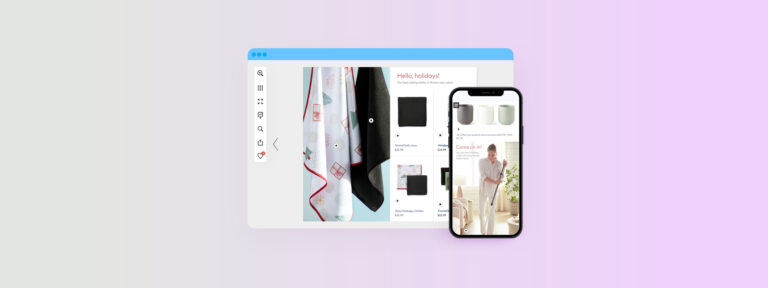
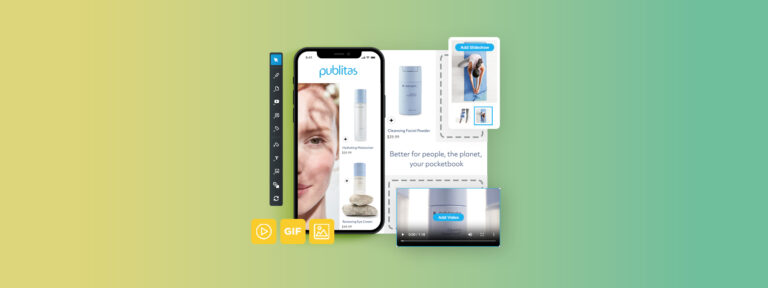
One of the clearest practical applications of the NRF 2026 trends is in how retailers use digital catalog formats to support personalized discovery at scale. Publitas is a digital catalog platform that helps retailers create shoppable, interactive content that bridges the gap between inspiration and purchase.
- Discovery Commerce and Product Discovery: Digital catalogs support curated, visual browsing experiences that help shoppers discover products naturally, reducing friction between inspiration and conversion.
- AI-Driven Personalization and Dynamic Content: Real-time inventory feeds, localized promotions, and automated product updates help retailers deliver more relevant shopping experiences at scale.
- Mobile-First Engagement and Retail Media: Responsive catalog experiences improve mobile engagement while creating new retail media opportunities through sponsored product placements and interactive content.
- Data-Driven Decision Making: Analytics such as heatmaps, engagement tracking, and conversion insights help retailers optimize product visibility and connect digital interactions with online and in-store sales.
Common Mistakes Retailers Make When Acting on Trends
Here are the most common mistakes retailers make when responding to retail trends for 2026, especially as the industry shifts from experimentation to operational execution.
- Adopting tools before solving data problems. AI personalization and real-time merchandising tools perform poorly on fragmented data. Retailers that invest in tools before cleaning and centralizing their data infrastructure consistently underdeliver on projected outcomes.
- Treating personalization as a marketing function only. At NRF 2026, personalization was discussed as a cross-functional capability spanning product discovery, inventory management, and customer service. Retailers who confine it to the marketing team limit its potential impact and create inconsistent experiences across the customer journey.
- Scaling pilots without organizational readiness. The execution era that NRF 2026 described requires organizational capabilities that many retailers have not yet built such as data governance processes, cross-channel workflow integration, and teams capable of acting on real-time signals. Technology investment without corresponding capability building typically stalls.
- Chasing every emerging trend simultaneously. The breadth of retail technology trends on display at NRF 2026 can create pressure to adopt broadly. Retailers who focus deeply on one or two high-impact areas tend to outperform those who spread investment across many parallel initiatives without building durable capability in any of them.
Retailers that operationalize these retail trends for 2026 early will be better positioned for long-term growth and customer loyalty.
FAQs
What are the most important retail trends from NRF 2026?
The defining NRF retail industry trends 2026 included AI in retail 2026 moving into operational infrastructure, real-time retail execution, and personalization in retail becoming central to product discovery and customer retention.
How is AI being used in retail in 2026?
AI in retail 2026 includes agentic commerce, conversational AI, demand forecasting, and personalization engines embedded into retail infrastructure, with the Walmart and Google Gemini Universal Commerce Protocol partnership emerging as a key NRF retail industry trends 2026 example.
What is real-time retail and why does it matter?
Real-time retail refers to the ability to update pricing, inventory, merchandising, and customer communications in response to live signals rather than on fixed schedules. It matters because consumer behavior, competitive pricing, and inventory conditions change continuously.
How can retailers implement personalization at scale?
Scalable personalization in retail relies on centralized customer data, unified product information, and AI systems that connect both across channels in real time, helping retailers deliver relevant product discovery and customer experiences at scale.
Which retail trends deliver the fastest ROI?
Among the most valuable retail trends for 2026, AI-powered personalization and real-time digital merchandising are delivering the fastest ROI, with effective AI personalization strategies generating 10–15% revenue uplift and measurable improvements within 60 to 90 days.