
Share article
Affiliate programs consistently generate conversions, but volume is not the same as profitability. Understanding how to increase average order value with affiliate marketing has become a priority for retail and ecommerce teams focused on improving channel efficiency, basket size, and margin performance. If affiliates are driving shoppers toward single low-margin purchases, commission costs can quickly reduce overall profitability. Affiliate‑driven traffic can substantially increase your average order value (AOV), with studies showing that affiliate referrals lift AOV by up to 21% compared to non‑affiliate buyers, and that affiliates drive roughly 16% of global e‑commerce orders and sales.
This guide is for retail and ecommerce teams who already run affiliate programs and want to shift toward affiliate marketing to increase AOV, basket size, and channel-level margin. The strategies below are grounded in how affiliate traffic actually behaves after the click.
The Real Problem: Affiliate Revenue Is Not Always High-Quality Revenue
Many affiliate programs appear profitable on the surface because they generate consistent order volume. The problem is that transaction growth alone does not guarantee meaningful revenue contribution or sustainable channel profitability. Retailers focused on long-term ecommerce performance increasingly evaluate affiliate traffic through average order value, basket composition, and post-click behavior rather than conversion count alone.
More Orders Do Not Always Mean Better Growth
Transaction count is the metric most affiliate dashboards default to. But a high volume of low-value single-item orders often disguises a profitability problem, including thin margins, high fulfillment costs per unit, and commission rates that consume most of what little revenue remains. Increase average order value ecommerce programs are built around recognizing this imbalance early, before deteriorating contribution margins reveal it at quarter-end.
Why Affiliate Traffic Often Underperforms After the Click
Affiliates send traffic with a specific context attached. A deal-focused content site tells its audience to expect a discount. A product review primes the reader to evaluate a single item. A cashback platform creates a buyer who is completing a pre-decided purchase rather than exploring. In each case, the affiliate marketing ecommerce strategy has already narrowed shopping intent before the visitor lands. The problem compounds when the landing page matches that narrow intent, presenting a single product or a minimal category page. The click converts, but at the lowest possible order size because nothing in the journey encourages broader discovery.
When Acquisition Efficiency Starts Hiding Profitability Problems
Cost per acquisition from affiliate channels is often cited as a win, especially since affiliate marketing programs consistently deliver average ROI rates between 200% and 500%. But strong ROI alone does not guarantee efficient growth. A low CPA tied to low-AOV purchases can still erode profitability once commission payouts, fulfillment, and operational costs are factored in. If you net $8 on a $40 affiliate-driven order after commission and fulfillment, you have a volume problem disguised as an efficiency story.
Retailers who track ecommerce AOV strategies at the channel level consistently find that affiliate segments have the widest disconnect between conversion volume and revenue contribution per session. Fixing that disconnect does not require more traffic. It requires restructuring what affiliates promote, how they promote it, and where the traffic lands.
What Actually Increases AOV From Affiliate Traffic?
Increasing Average Order Value (AOV) from affiliate traffic depends less on generating more clicks and more on shaping purchase behavior before and after the visitor lands. Retailers focused on how to increase average order value with affiliate marketing typically see stronger results when affiliates promote bundled solutions, educational content, and basket-building incentives rather than isolated products.
Give Affiliates Something Better to Promote Than Individual Products
One of the most direct ways to increase average order value ecommerce-wide is to change what you ask affiliates to promote. Instead of individual SKUs, provide curated collections, seasonal edits, or themed bundles. A content affiliate writing a summer entertaining guide can credibly promote a full outdoor dining set rather than a single item.
Affiliate-curated bundles perform especially well because they align with how shoppers evaluate products in context. A beauty creator promoting a foundation alongside a primer and application brush creates a stronger purchase case than recommending a single item alone. Retail data consistently shows that bundled product strategies increase basket size because shoppers perceive higher convenience and stronger product compatibility.
This approach also improves the affiliate experience itself. Affiliates gain richer editorial angles and more useful content formats, while retailers receive traffic arriving with broader purchase intent already established.
Reward Basket Growth, Not Just Transactions
Commission structures drive behavior. A flat rate per transaction incentivizes affiliates to maximize click-to-conversion volume, which means they favor the lowest-friction path to a completed order. To make affiliate marketing to increase AOV work structurally, you need escalating payouts tied to basket value. A tiered structure typically works best.
- Flat commission on orders below baseline AOV.
- Increased commission for orders exceeding target basket thresholds.
- Premium payout tiers tied to bundles, complementary categories, or multi-item purchases.
Tiered discount codes can reinforce this behavior further. For example, escalating offers tied to spend thresholds encourage shoppers to add incremental items to unlock stronger savings.
Match Affiliate Types to Shopping Intent
Different affiliate categories influence shopper behavior differently. Cashback and coupon affiliates typically capture transactional buyers already close to checkout. Lifestyle creators and editorial publishers influence earlier-stage discovery and product evaluation.
A stronger affiliate marketing ecommerce strategy aligns affiliate type with the shopping experience most likely to expand basket size. Content creators are particularly effective at increasing AOV because they provide contextual product education before the click occurs.
Make the Post-Click Journey Feel Like Continuation, Not Interruption
The biggest opportunity in how to increase average basket size from affiliate channels is the post-click experience. When a shopper arrives through an affiliate link, they carry the context of wherever they came from. If the landing page ignores that context, the buyer defaults to the minimum-commitment path: one item, add to cart, check out.
Dedicated affiliate landing pages or curated digital catalog experiences that match the affiliate’s editorial angle reduce that friction. They present a coherent set of products that make sense together. The result, for retailers focused on how to increase average order value with affiliate marketing, is a buyer who feels like they are continuing a discovery journey rather than being dropped into a generic store.
The Revenue Impact of Getting Affiliate Merchandising Right
Retailers that optimize affiliate merchandising often see affiliate-driven revenue increase by 15% to 30%, with mature programs generating more than 20% of total ecommerce sales through affiliate partnerships. The difference typically comes from improving basket composition, aligning affiliates with higher-value products, and measuring profitability beyond simple conversion volume.
1. Higher Average Order Value Without Increasing Traffic Spend
The commercial upside of ecommerce AOV strategies within affiliate channels is substantial. However, every improvement in affiliate basket size creates incremental revenue without additional acquisition investment. One of the most effective ways to close that gap is through affiliate-curated merchandising.
Bundles, themed collections, and complementary product groupings encourage shoppers to purchase across categories instead of defaulting to a single SKU. Research shows that bundling can increase AOV by 20–30%, and product‑pair bundles are especially effective when promoted by affiliates
For retailers focused on how to increase average order value with affiliate marketing, the opportunity is not necessarily more traffic. It is extracting more revenue from the traffic already converting.
2. Better Margin Protection Than Constant Discounting
Many affiliate programs rely heavily on discount codes to drive conversion activity. While discounts can increase transaction volume, they also compress margins, especially when layered with affiliate commission payouts and fulfillment costs.
A stronger affiliate marketing to increase AOV strategy reduces dependency on aggressive discounting by encouraging larger baskets instead. Curated bundles, threshold-based incentives, and complementary product recommendations increase revenue per order without requiring deeper markdowns.
Tiered commission structures also help shift affiliate behavior toward profitability-focused promotion. Rewarding affiliates for higher basket values, premium-category purchases, or multi-item orders aligns incentives with long-term channel margin rather than pure transaction count.
3. Stronger Product Discovery Across High-Intent Traffic
Affiliate merchandising works best when it matches shopping intent with broader discovery opportunities. Content affiliates, editorial publishers, and creators often attract shoppers still evaluating solutions, collections, or categories rather than searching for a single predetermined item.
A shopper arriving from a home cooking gift guide, for example, is more receptive to coordinated kitchen products, accessories, and bundled recommendations than a shopper clicking a generic coupon link. Retailers that support this discovery process through curated landing pages and contextual merchandising consistently improve basket size and engagement depth.
This is where understanding how to increase average basket size becomes a merchandising challenge rather than simply a pricing exercise. The more naturally products are presented together, the more likely shoppers are to expand their purchase consideration.
4. Cleaner Measurement for Channel Profitability
Tracking affiliate success through conversion volume alone creates a distorted view of channel performance. Retailers evaluating affiliate profitability more accurately typically prioritize metrics such as AOV, ROAS, EPC (earnings per click), and contribution margin alongside conversion rate.
Measuring affiliate performance through profitability-based metrics helps identify which partnerships actually contribute incremental revenue growth rather than low-margin transaction volume.
For ecommerce teams refining how to increase average order value with affiliate marketing, better measurement often becomes the foundation for smarter merchandising, stronger affiliate alignment, and more sustainable channel growth.
A Practical Framework to Audit Your Affiliate AOV Opportunity
Auditing affiliate Average Order Value (AOV) helps retailers identify which partners drive profitable, high-value baskets versus low-margin discount-driven sales. A strong audit framework evaluates publisher mix, commission models, and conversion paths to uncover opportunities for improving revenue per transaction.
Step 1: Segment Affiliate Traffic by Revenue Quality
Pull your affiliate channel data and separate it into three buckets: orders below your site-wide AOV baseline, orders at or near baseline, and orders meaningfully above it. Identify which affiliate sources appear in each bucket.This shows where the AOV difference is concentrated and which partners are already driving high-value orders without any structural change.
Step 2: Review Where Affiliate Traffic Lands
Map each top affiliate source to the landing page it drives traffic to. Ask whether the page presents a single product or a discovery experience, whether complementary products are visible above the fold, and whether the editorial context of the affiliate is reflected anywhere on the page. If the answer is mostly no, you have a straightforward increase average order value ecommerce opportunity that requires no commission change at all.
Step 3: Identify Merchandising Gaps
For your top ten affiliate sources by volume, identify which product categories or bundles are most aligned with the affiliate’s audience but are not currently being promoted through that channel. These are your fastest AOV wins. They require brief coordination with the affiliate to update links and copy, plus a landing page that presents the fuller product set rather than a single SKU.
Step 4: Test Curated Discovery Experiences Instead of Static Landing Pages
The highest-impact structural change is replacing static single-product landing pages for high-value affiliate sources with curated discovery experiences. These can be themed category pages, seasonal collections, or shoppable digital catalog formats that present multiple products in an editorial layout.
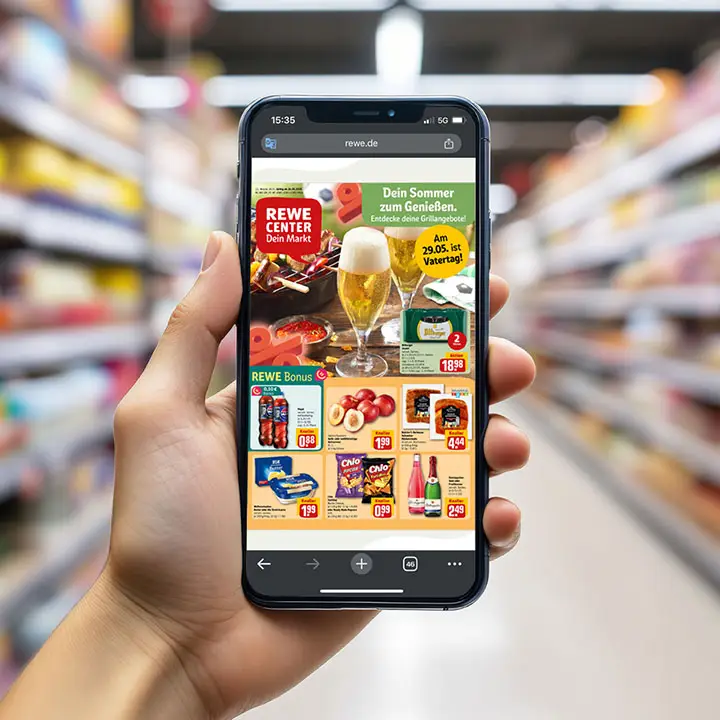
Retailers using Publitas create shoppable digital catalogs that can be linked directly from affiliate content, giving affiliates a richer asset to promote while presenting shoppers with multi-product discovery from the first click. This directly supports affiliate marketing to increase AOV by addressing the post-click journey, where most improvement potential sits.
Conclusion
Retailers looking at how to increase average order value with affiliate marketing should focus less on generating additional clicks and more on improving the quality of each transaction. Stronger affiliate marketing ecommerce strategy execution comes from curated bundles, contextual landing experiences, tiered incentives, and profitability-based measurement. Brands that align affiliate content with richer product discovery consistently improve basket size, protect margins, and create more sustainable revenue growth. The most effective ecommerce AOV strategies turn affiliate traffic into a guided shopping journey rather than a single-product conversion path.
FAQs
Why does affiliate traffic sometimes generate a lower average order value?
Affiliate traffic often arrives with a narrow purchase context established by the referring content. Deal and cashback affiliates often drive single-item purchases. Combined with product-focused landing pages, this limits broader product discovery and basket growth.
Which affiliate partners typically drive higher-value retail orders?
Lifestyle creators, editorial publishers, and comparison sites usually drive higher AOV because shoppers arrive in discovery mode and explore multiple products.
How can retailers increase AOV without offering bigger discounts?
Use bundles, curated landing pages, tiered commissions, and complementary product recommendations to encourage larger baskets without increasing discount depth.
What metrics should retailers track beyond affiliate-attributed revenue?
Track AOV, units per transaction, contribution margin, ROAS, and repeat purchase rate to evaluate true affiliate channel profitability.
What kind of landing experience converts affiliate traffic into larger baskets?
Curated collections, themed category pages, and shoppable digital catalogs help shoppers discover related products and increase basket size naturally.
Enjoyed this article?
Get the next one straight to your inbox.