
Share article
If you are comparing AnyFlip vs FlipHTML5, the choice is less about enterprise strategy and more about which budget flipbook tool is easier to live with. Review data points to FlipHTML5 as easier to use, set up, and support, while AnyFlip is rated better for ease of administration and product direction. Retail teams that need shoppable, product-feed-driven catalogs should also evaluate a commerce-focused alternative.
| Category | AnyFlip | FlipHTML5 |
| Core focus | PDF-to-flipbook publishing | PDF-to-HTML5 flipbook publishing |
| Best for | Marketers, designers, educators, and small businesses | Designers, marketers, publishers, sales, and educators |
| Ease of use | Solid, but lower review signal | Stronger review signal |
| Setup | Good | Easier per G2 comparison data |
| Administration | Preferred by reviewers | Strong, but behind AnyFlip |
| Support | Mixed review sentiment | Higher support rating |
| Product direction | Preferred by reviewers | Strong, but behind AnyFlip |
| Free plan | Watermark and feature limits | Watermark, ads, and feature limits |
| Retail catalog fit | Basic flipbook publishing | Basic flipbook publishing |
Verdict: For most teams that just want a polished flipbook quickly, FlipHTML5 is the safer default. AnyFlip is still worth considering if ease of administration and roadmap sentiment matter more. Retail and ecommerce teams should treat both as starter tools, not commerce catalog platforms.
This keeps the decision grounded in day-to-day publishing reality: upload limits, branding restrictions, support responsiveness, and whether a simple flipbook still looks credible once shared externally.
What Is AnyFlip?
AnyFlip is an interactive digital publishing platform that converts PDFs into HTML5-style page-flip publications. It is used for catalogs, brochures, magazines, reports, newsletters, and other document-based marketing content.
The platform offers templates and customization options for brand logos, covers, buttons, colors, icons, backgrounds, and publication domains. Its target users include marketers, designers, educators, small businesses, and individual creators who want a simple way to turn static documents into digital flipbooks.
What Is FlipHTML5?
FlipHTML5 is publishing software for creating personalized, responsive flipbooks from PDFs, images, and other content formats. Its audience includes designers, marketers, business owners, publishers, corporate communications teams, sales teams, social media managers, and educators.
FlipHTML5 is widely reviewed as easy to use, especially for teams that want quick PDF conversion, mobile-friendly output, sharing, embedding, and basic analytics without building a publication from scratch.
AnyFlip vs FlipHTML5: Feature-by-Feature Breakdown
Ease of Use & Setup
This is one of the clearest differences in the AnyFlip vs FlipHTML5 comparison. G2 comparison data shows reviewers found FlipHTML5 easier to use, easier to set up, and easier to do business with overall. AnyFlip still works well for basic conversion and administration, but FlipHTML5 has a stronger ease-of-use signal.
What this means for you:
- Choose FlipHTML5 if your team needs a short learning curve and fast setup.
- Consider AnyFlip if administration and roadmap confidence matter more.
Customization & Templates
Both tools support templates, themes, branding, and page-flip design. AnyFlip offers brand controls for logos, buttons, colors, covers, icons, backgrounds, and publication presentation. FlipHTML5 offers templates, themes, background settings, custom logos, interactive media, trackable links, and editor controls on paid tiers.
The difference is depth. FlipHTML5 is stronger when you need more interactive customization. AnyFlip is enough for straightforward branded flipbooks.
What this means for you:
- Choose AnyFlip for basic brand control.
- Choose FlipHTML5 for richer design and interaction options.
Free Plan Limitations
Free plans matter more in this category because many buyers are testing whether a flipbook tool is “good enough” before paying. AnyFlip’s pricing page lists a free plan with watermark embedding and limited access to advanced editing. FlipHTML5’s pricing page lists a free plan with daily creation limits, one bookcase, limited access to statistics, and branding restrictions, while paid tiers unlock ad removal, custom logos, downloads, and longer analytics windows.
The free plans are useful for testing, but weak for polished public-facing publishing.
What this means for you: Expect to upgrade if the flipbook represents your brand, clients, or products.
In practice, the free tier is useful for testing conversion quality, but paid plans become necessary once the publication represents a campaign, client, or product line.
Customer Support & Product Updates
Review data gives FlipHTML5 the advantage in product support. G2 also shows reviewers preferred AnyFlip for product direction, which means AnyFlip gets stronger sentiment around roadmap and future updates.
That creates the real tradeoff. FlipHTML5 appears stronger in terms of current support experience. AnyFlip looks stronger for administration and roadmap confidence.
What this means for you:
- Choose FlipHTML5 if support quality matters more.
- Consider AnyFlip if administration and roadmap direction carry more weight.
Performance & Reliability
For both tools, performance depends on file size, page count, image weight, and embedded media. Some AnyFlip reviews mention upload friction, glitches, rich-media limitations, or limited help resources. FlipHTML5 reviews are generally stronger on ease and polish, though free-plan limits and subscription dependency still matter.
Do not judge either platform by a small brochure. Test your largest PDF, heaviest media, and real publishing workflow before committing.
What this means for you: Run a real test file before buying either platform.
This test should include mobile viewing, embedded media, link behavior, load time, and how the finished flipbook performs when shared outside your own network.
Pros and Cons of AnyFlip
| Pros | Cons |
| Simple PDF-to-flipbook conversion | The free plan includes a watermark |
| Good ease-of-administration signal | Support reviews are mixed |
| Useful brand customization options | Advanced editing needs paid tiers |
| Positive product-direction sentiment | Performance can vary with large files |
| Affordable paid plans | Less polished review sentiment than FlipHTML5 |
AnyFlip works best when you need basic branded flipbooks, straightforward administration, and a low-cost way to publish PDFs online.
Pros and Cons of FlipHTML5
| Pros | Cons |
| Easier to use and set up per review data | The free plan includes ads or branding limits |
| Stronger support rating | Advanced editing sits behind paid tiers |
| Good template and customization depth | Subscription dependency matters |
| Mobile-friendly flipbooks | Offline/download options depend on the plan |
| Stronger review volume | Not built for retail commerce catalogs |
FlipHTML5 works best when ease of use, faster setup, support, and interactive customization matter more than administration or roadmap sentiment.
What Do Real Users Say? AnyFlip vs FlipHTML5 Reviews
A fair AnyFlip vs FlipHTML5 review should keep the category in perspective. These are budget-friendly flipbook tools, not enterprise content platforms. G2 and Capterra data show FlipHTML5 with stronger ease-of-use and customer support sentiment.
AnyFlip reviewers often mention simplicity, quick PDF enhancement, administration, and useful flipbook output. Criticism tends to focus on support inconsistency, occasional upload or hyperlink issues, limited guidance, and free-tier restrictions.
FlipHTML5 reviewers often mention ease of use, clean output, fast conversion, and helpful support. Criticism tends to focus on free-plan limitations, watermarking, ads, and the need to upgrade for serious publishing.
The practical takeaway from this AnyFlip vs FlipHTML5 review is simple:
- FlipHTML5 is the safest default for most casual users
- AnyFlip remains viable for users who value administration and roadmap direction.
Is There a Better Alternative to AnyFlip and FlipHTML5?
For basic PDF-to-flipbook publishing, both tools are useful. But if the question is, is AnyFlip vs FlipHTML5 better for retail, the answer is that neither is purpose-built for retail commerce catalogs.
The issue is not that AnyFlip or FlipHTML5 are bad flipbook tools. The issue is that flipbook software usually stops at presentation, while retail catalogs need product data, shopping actions, and performance measurement.
Retail and e-commerce teams often need:
- Live product feeds that keep pricing, SKUs, and availability current
- Shoppable catalog links connected to ecommerce journeys
- Product discovery across email, social, paid media, and CRM
- Analytics tied to product interaction, not only views
- Catalog workflows built for recurring campaigns and seasonal promotions
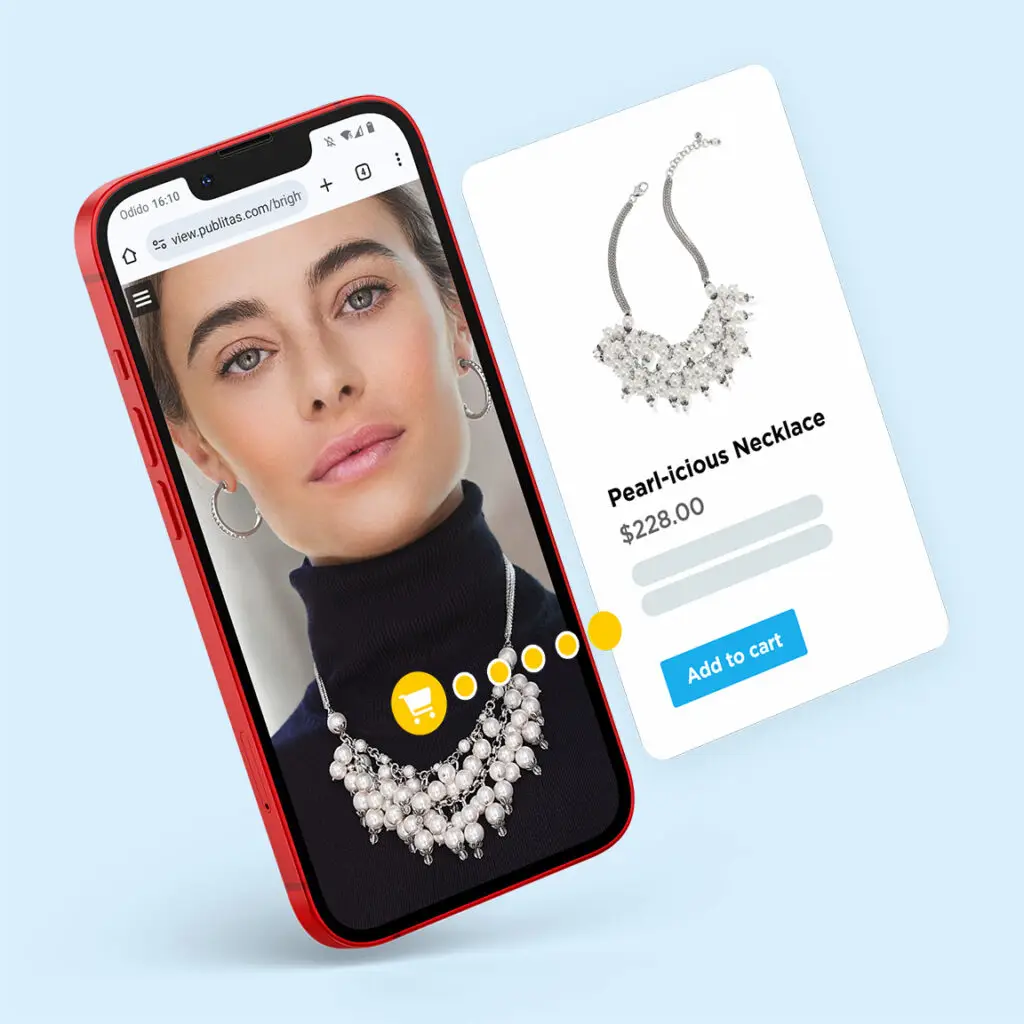
This is where Publitas fits into a different category. Publitas is built for retailers that need commerce-driven catalog publishing, shoppable experiences, product-feed-based content, and measurable engagement. Compared with a basic AnyFlip vs FlipHTML5 comparison, it gives retail teams a more practical path for product discovery and catalog performance.
That distinction matters because retail catalogs are not just documents. They are recurring commerce assets that need product accuracy, shopping actions, analytics, and campaign-ready distribution.
For retailers comparing AnyFlip vs FlipHTML5 pricing against catalog requirements, Publitas will usually sit at a more capable tier. Retail teams can review Publitas’ digital catalog capabilities or book a demo to assess whether they need basic flipbook conversion or a commerce-ready catalog platform.
How to Choose the Right Flipbook Software
Use these questions to guide the decision.
These questions prevent teams from overbuying early while still leaving room to upgrade when publishing needs become more complex.
- Is ease of use your top priority?
Choose FlipHTML5 if your team wants a smoother setup and a stronger support signal. - Do you need basic conversion or deeper customization?
Choose AnyFlip for simple branded flipbooks. Choose FlipHTML5 for richer templates, media, and interactive editing. - Is this occasional publishing or a recurring program?
Either can work for occasional use. For recurring campaigns, test storage, analytics, workflow, and upgrade requirements. - Will you need shoppable or commerce features later?
If product feeds, shoppable links, and retail analytics matter, compare both tools with a commerce-focused catalog platform.
For AnyFlip vs FlipHTML5 pricing, verify the current plan pages before buying. AnyFlip’s official pricing currently lists a free plan plus Pro, Platinum, and Enterprise tiers. FlipHTML5’s official pricing lists Free, Pro, Platinum, and Enterprise plans, with paid tiers unlocking ad removal, branding, downloads, longer statistics access, and advanced editing.
Frequently Asked Questions
Is AnyFlip or FlipHTML5 easier to use?
Review data shows FlipHTML5 is generally rated as easier to use and set up. That reflects aggregated review sentiment, not a universal rule. AnyFlip is still straightforward for basic PDF-to-flipbook publishing.
Which is cheaper, AnyFlip or FlipHTML5?
AnyFlip vs FlipHTML5 pricing is close at the budget end. AnyFlip’s official pricing lists a free plan and paid plans starting at $13.08 per month on annual billing. FlipHTML5’s official pricing lists a free plan and paid plans starting at $12 per month on annual billing.
Does AnyFlip or FlipHTML5 have a watermark on the free plan?
Yes. AnyFlip’s free plan includes a watermark on published ebooks. FlipHTML5’s free plan includes branding restrictions on the free tier, with paid tiers unlocking custom branding, ad removal, and additional publishing features.
Which platform has better customer support, AnyFlip or FlipHTML5?
G2 comparison data shows reviewers rated FlipHTML5 higher for the quality of support. Capterra review data also shows strong customer service sentiment for FlipHTML5. AnyFlip still has positive reviews, but support sentiment is more mixed.
Is there a better alternative to AnyFlip and FlipHTML5 for retail catalogs?
Yes. Retailers that need shoppable catalogs, live product feeds, ecommerce integrations, and product-level analytics should evaluate retail-focused alternatives. Publitas is designed for retail and e-commerce catalog publishing, which makes AnyFlip vs FlipHTML5 only part of the shortlist for commerce teams.
Enjoyed this article?
Get the next one straight to your inbox.