
Share article
Heyzine works well for basic flipbook creation, but ecommerce and marketing teams with more demanding workflows consistently hit a ceiling. If you need deeper analytics, shoppable product flows, or real collaboration tools, finding the right Heyzine alternative in 2026 is a decision worth making carefully.
This guide compares the strongest contenders on the criteria that matter most: lead tracking, interactive features, integrations, and template capability. The goal is a clear, criteria-based comparison so your team can move forward with confidence.
Quick Comparison: Top Heyzine Alternatives at a Glance
This flipbook software comparison covers the platforms most relevant to e-commerce and marketing teams in 2026. Publitas leads the list given its shoppable catalog focus, followed by other tools.
| Tool | Best for | Key strength | Key limitation | Analytics depth | Interactivity | Scalability |
| PublitasRecommended | E-commerce catalog teams | Product feed sync auto-tags items; shoppable overlays link directly to cart. Used by IKEA, Carrefour, Staples. | Narrower fit outside retail; limited built-in design editor | Page views, most-viewed pages, catalog-to-cart conversion, personalized dashboards, GA integration | Shoppable product hotspots, video embeds, animated content, rich media overlays | Enterprise plan covers multiple markets and languages; 2,000+ retailers including global chains |
| Publuu | Sales teams tracking individual leads | Per-client tracking links and granular per-page viewer stats | No permanent free tier; no team collaboration features | Views, visitors, clicks, avg. time per page, most-viewed pages, per-client tracking links | Hotspots (video, photo gallery, GIF, links); virtual bookshelf; QR code sharing | Up to Premium plan ($169/mo); no multi-user team workspace |
| FlippingBook | Professional publishing and document security | Advanced branding controls, password protection, domain restriction, and SEO-optimised flipbooks | Higher cost at team scale (~$99/mo); no catalog automation or built-in design editor | Per-page time, scroll depth, link clicks, reader-level tracking, CRM export | Pop-ups, video, links, lead forms; no animation or AI-generated content | Team and Enterprise plans; supports large document libraries with access controls |
| Flipsnack | Marketing and design teams | Built-in Design Studio with 2,000+ templates; Beta Automator pulls product data from Google Sheets | Images blur on zoom (no vector support); key features locked behind higher tiers | Page views, link clicks, lead form submissions, shopping list saves, team-level reporting | Videos, pop-ins, animated elements, AI-assisted design, lead forms, 2,000+ templates | Enterprise plan supports large teams with brand governance, SSO, and collaboration |
| FlipHTML5 | Individuals and small businesses on a budget | Permanent free tier; converts PDF, PPT, Word, and images | Free plan shows ads and watermarks; advanced features require Enterprise upgrade | Basic view counts and page interactions; GA integration on paid plans only | Slideshow animations, timeline editor, embedded media; desktop offline editor available | Cloud and desktop publishing; unlimited pages on paid plans; suitable for solo creators |
| Paperturn | Small businesses needing quick setup | Clean, intuitive interface, PDF to flipbook in minutes with no coding required | Limited scalability for large catalogs or multi-market teams | Visit tracking, page-level engagement, basic viewer stats | Video, image, GIF, and link embeds; lead capture forms; QR code sharing | Plans suit small to mid-size businesses; no enterprise-tier multi-market support |
What This Table Doesn’t Show (But Matters)
The feature column above will give you a starting point, but not a final answer. The right Heyzine alternative for your team depends on how well a platform fits into your actual publishing and sales workflow, not just how it scores on a checklist.
For example, AI-driven analytics and lead capture have become baseline expectations across flipbook platforms in 2026, so the real differentiator is execution quality. Right now, ecommerce teams need reliable product feed compatibility and shoppable link performance that holds up at scale.
Moreover, the pricing structure adds another layer. Several platforms reserve collaboration tools and analytics exports for higher-tier plans, which changes the actual cost calculation significantly.
Why Teams Start Looking for a Heyzine Alternative
Heyzine handles simple PDF-to-flipbook conversion perfectly, but that’s largely where its strengths end. For ecommerce and marketing teams that need their content to generate leads, support sales workflows, and scale across larger operations, the platform’s limitations become a recurring friction point.
We Can Publish Catalogs, But Can’t Measure Performance
Basic page-view data doesn’t give marketing teams enough to make informed decisions. Serious Heyzine competitors offer tracking that connects directly to sales outcomes:
- Actionable viewer data: Individual-level tracking shows exactly which prospect opened a document, which pages held attention, and whether they came back, data that page-view counts never surface.
- Advanced engagement analytics: Time-on-page, drop-off points, and session-level behavior tell you where interest dies, which is where optimization actually starts.
- UTM parameter support: Without campaign attribution, you can’t tell which channel drove a conversion. Heyzine doesn’t support UTM parameters natively, making it harder to justify media spend.
- SEO-optimized publishing: A flipbook that can’t be indexed can’t earn organic traffic. Teams that rely solely on direct link sharing are leaving a scalable acquisition channel unused.
This Feels Like a Flipbook, Not a Shopping Experience
Heyzine’s page-turn format presents products but doesn’t move buyers toward a purchase. For teams investing in catalog software for e-commerce, that gap has a direct revenue cost:
- Interactive product hotspots: Every extra step between product discovery and the product page costs conversions. Clickable hotspots remove that friction without pulling the viewer out of the catalog.
- Embedded shopping flows: A viewer who has to leave the catalog to complete a purchase often doesn’t. Embedded checkout paths keep the buying intent intact.
- Live product feed integration: Manually updating catalog content when inventory or pricing changes isn’t scalable. Heyzine doesn’t support feed-based syncing, which creates accuracy problems at volume.
- Clean video integration: Third-party branding on embedded video breaks the experience that the catalog is trying to create. It signals to buyers that the content isn’t fully owned.
Campaign Traffic Drops Off After Landing
A flipbook that draws traffic but has no mechanism to act on it turns every visit into a dead end. What actually converts that traffic into leads requires:
- Built-in lead capture forms: A viewer who leaves without identifying themselves is lost. Gating content behind a contact form gives every session a chance to produce a qualified lead.
- Retargeting pixel support: Most viewers don’t convert on the first visit. Heyzine’s shareable links offer no way to reach them again, which means that initial engagement spend produces nothing if the first visit doesn’t close.
- Embedded CTAs and pop-ups: Engagement peaks at specific moments inside a catalog. A CTA that appears on the right page converts better than one sitting at the bottom of a landing page that the viewer never scrolls to.
- CRM and automation integrations: A lead captured in a flipbook that requires manual export before it enters a pipeline slows down sales response time, which directly affects close rates.
We’ve Outgrown Basic Tools
As teams scale, Heyzine’s individual-first structure creates operational friction. A Heyzine vs alternatives evaluation at the team level surfaces the same requirements repeatedly:
- Shared workspaces and folders: When multiple people manage catalog content across departments, disorganized access creates version control problems and publishing delays.
- Role-based permissions: Not everyone publishing or editing content should have the same access level. Without permission controls, one wrong action can affect live content across the entire account.
- White-labeling and custom domains: Heyzine’s branding appearing on customer-facing content undermines the professional presentation that enterprise and mid-market teams build their reputation on.
- API access: Marketing and sales stacks are rarely built around a single tool. Without API access, Heyzine sits outside the workflow rather than inside it, creating manual steps that don’t scale.
- Advanced security controls: Teams handling commercial documents with pricing, contracts, or unreleased product lines need IP restrictions, domain locks, and SSO. These aren’t optional at enterprise scale.
What to Look for in a Heyzine Alternative (Before Choosing)
Most teams only realize what their flipbook tool is missing after a campaign underperforms or a sales workflow breaks down. A structured evaluation of any Heyzine alternative should cover these areas before that cost appears:
- Advanced Security: Basic link sharing doesn’t hold up when documents carry sensitive pricing or unreleased product lines. Domain whitelisting, email-level access controls, and SSO support give teams the control they need before the first link goes out.
- Page-Level Analytics and Lead Capture: Total view counts tell you a document was opened, not whether it moved a buyer closer to a decision. Page-level tracking combined with built-in lead capture forms closes that gap, turning passive readership into a qualified pipeline that any serious flipbook software comparison should account for.
- Team Collaboration and Access Management: An individual-account structure creates friction the moment a second person needs to publish or review content. Shared workspaces, role-based permissions, and folder organization are what keep that friction from compounding as team size grows.
- Customization and Brand Control: Third-party platform branding inside a customer-facing catalog pulls the buyer’s attention away from the product. Full control over logos, colors, and domain keeps that attention where it belongs.
- Multimedia and Interactive Capabilities: Clickable hotspots, embedded video, and audio give viewers more ways to evaluate products without leaving the catalog. For catalog software for e-commerce, directness matters most at the point where purchase intent is highest.
- Cost and Platform Fit: Cloud-based platforms support live sharing, real-time analytics, and feed integrations, while desktop-based tools suit teams that need offline control. Getting this distinction right before any Heyzine vs alternatives evaluation prevents adoption problems that features alone won’t fix.
- SEO and Discoverability: Heyzine flipbooks aren’t indexed by search engines, which means every viewer must arrive through a directly shared link. A platform that publishes SEO-optimized pages removes that dependency and gives catalog content a channel that doesn’t require paid distribution to perform.
Detailed Breakdown of the Best Heyzine Alternatives
The platforms below represent the strongest Heyzine competitors across different use cases. Each has been evaluated on publishing capability, analytics depth, and operational fit for marketing and sales teams.
1. Publitas
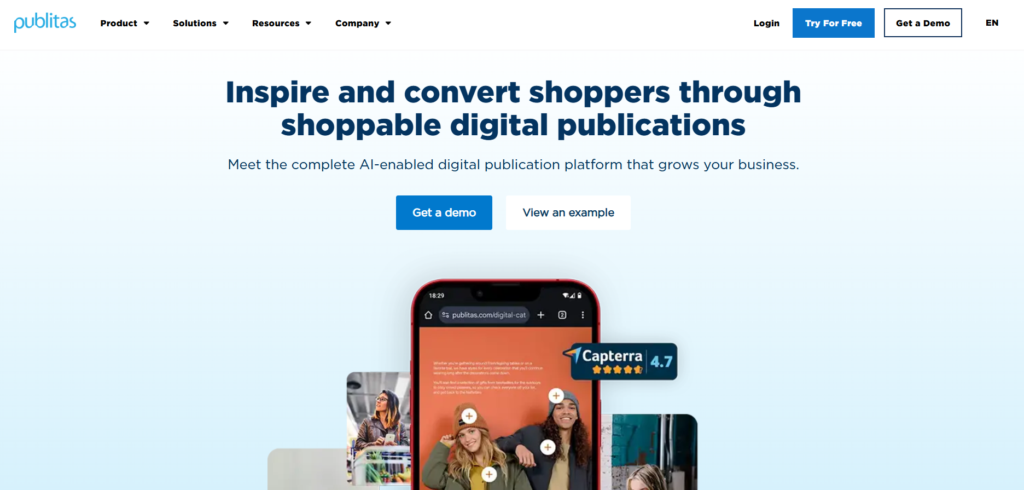
Publitas is built specifically for retailers and marketing teams that need their catalog to do more than display products. The platform connects directly to product feeds, publishes SEO-indexed content, and gives teams the analytics infrastructure to measure catalog performance against actual sales outcomes.
Pros:
- Transforms static PDFs into shoppable digital catalogs with live product feed integration, keeping pricing and inventory current without manual updates
- Publishes SEO-optimized pages that get indexed by search engines, giving catalog content a discoverability channel beyond direct link sharing
- Delivers page-level analytics and viewer-level tracking that connect catalog engagement to conversion data, not just traffic numbers
- Supports embedded CTAs, lead capture forms, and retargeting pixels, giving marketing teams full accountability across the campaign lifecycle
- Offers white-labeling, custom domains, and a clean viewer experience with no third-party branding in sight
Primary Advantage over Heyzine: Product feed integration keeps catalog content synced with live inventory and pricing, while SEO publishing gives that content a discoverability channel Heyzine simply doesn’t offer.
Best for: Retailers, ecommerce brands, and marketing teams that need catalog software for e-commerce with measurable performance.
2. FlippingBook
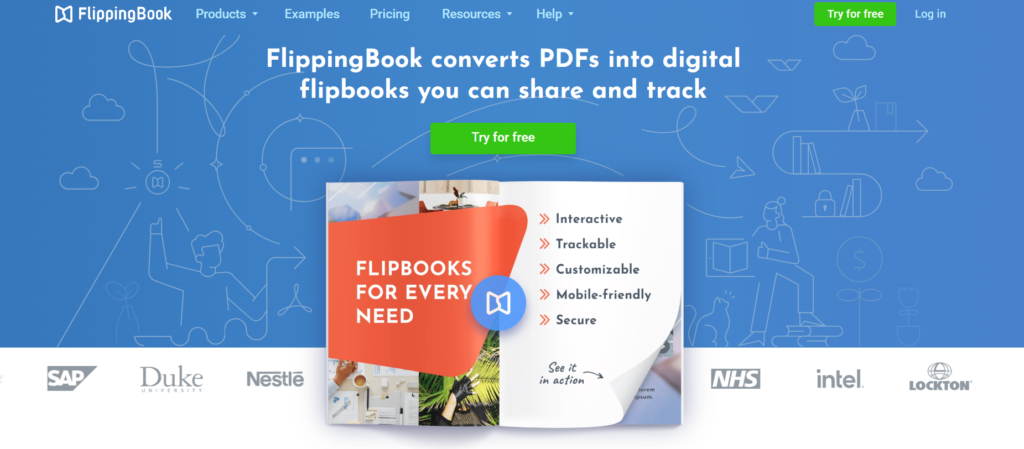
FlippingBook is built for teams that need polished, branded documents with individual-level tracking. It sits firmly in the B2B sales and marketing space, where knowing exactly who opened a proposal and which pages they read has direct pipeline value.
Pros:
- Full white-labeling with custom domain binding and complete removal of platform branding, so the document reflects the brand, not the tool
- Tracks individual viewer behavior, including which pages were read and how long each held attention, giving sales teams data they can act on
- Built-in lead capture forms feed directly into sales workflows without requiring manual export
Primary Advantage over Heyzine: Individual-level lead tracking tells sales teams when a prospect opened a document, making follow-ups timely rather than speculative.
Best for: Corporate marketing teams and sales teams managing high-value, branded B2B documents.
3. Flipsnack
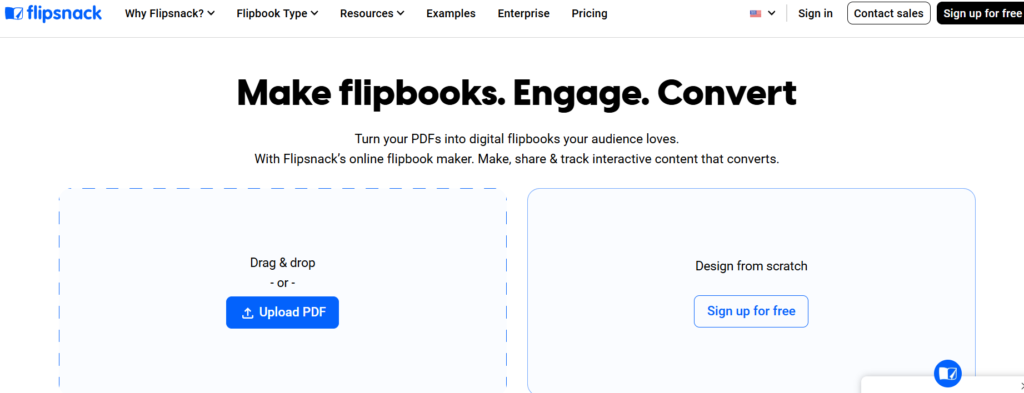
Flipsnack combines a strong online editor with publishing and analytics tools, making it one of the more self-contained options in this flipbook software comparison. Teams that update content frequently will find that the in-platform editing capability cuts turnaround time considerably.
Pros:
- Edits PDF content directly inside the platform, including text corrections and image replacements, without requiring a re-upload each time a change is needed
- AI-powered analytics go beyond traffic data to surface engagement patterns that inform content decisions
- Branded bookshelves keep multiple publications organized and consistently presented
Primary Advantage over Heyzine: Direct in-platform content editing removes the back-and-forth of correcting a source file and re-uploading, which compounds quickly for teams managing high-volume publishing.
Best for: Designers and marketers who update catalog content frequently and need editing flexibility built into the publishing tool.
4. FlipHTML5
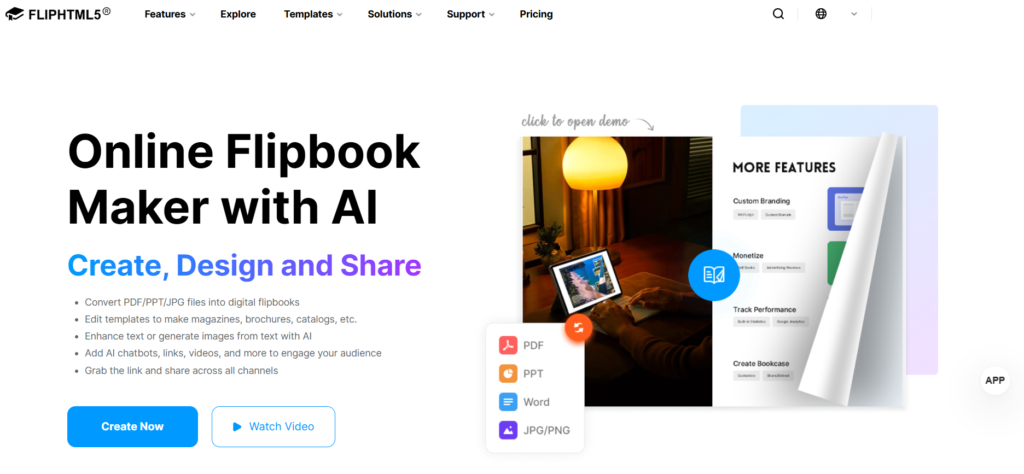
FlipHTML5 covers a wide feature range at a lower price point, making it a practical option for smaller teams or organizations with limited budgets that still need interactive publishing capabilities.
Pros:
- Over 1,000 templates paired with an animation editor that supports video, audio, and interactive links within the same workflow
- Batch conversion, custom domains, and a digital bookcase give teams the tools to manage and present multiple publications without upgrading
- Interactive editing tools are available at free and low-cost tiers, lowering the barrier to entry considerably
Primary Advantage over Heyzine: A more feature-rich free and entry-level tier that includes interactive editing and template variety, without locking core functionality behind a premium plan.
Best for: Small businesses, individuals, and non-profits that need an affordable Heyzine alternative without sacrificing interactive publishing capability.
5. Publuu
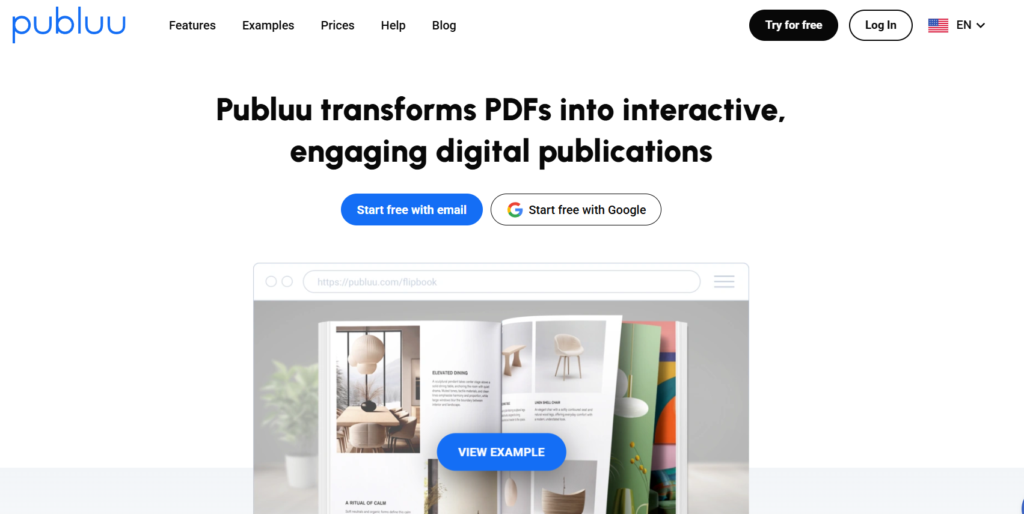
Publuu focuses on secure, trackable document sharing with real-time analytics. It suits teams where document confidentiality and viewer-level data matter as much as the publishing experience itself.
Pros:
- Password protection and secure sharing controls ensure sensitive documents reach only the intended audience
- Real-time tracking of page dwell time, interaction data, and individual viewer statistics gives teams visibility into how content is actually being consumed
- A clean viewer interface supports video and hotspot embedding without adding complexity to the experience
Primary Advantage over Heyzine: Security-first publishing with granular viewer tracking gives teams both access control and the behavioral data needed to act on what viewers do inside the document.
Best for: Teams publishing confidential reports, secure marketing materials, or analytics-driven content where access control is a baseline requirement.
6. MyFlipbook
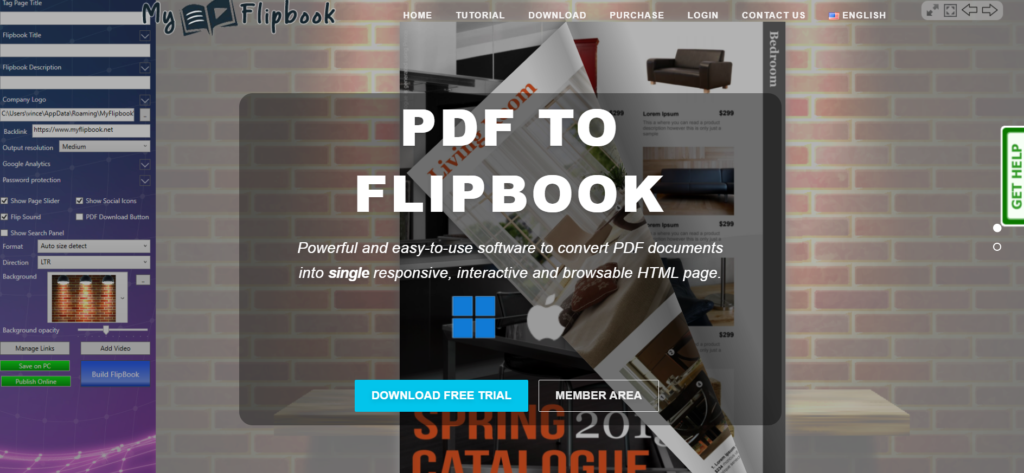
MyFlipbook operates differently from every other platform on this list. It is desktop software rather than a SaaS product, which means the output is fully owned and hosted independently of any third-party platform.
Pros:
- Saves flipbooks as self-contained HTML files that can be hosted on your own server or stored offline, with no platform dependency attached
- Preserves PDF links, supports video, and gives full branding control without requiring an active subscription to maintain access
- No monthly hosting fees, since the files live wherever you choose to put them
Primary Advantage over Heyzine: Complete ownership of the output file with no ongoing hosting costs, which suits teams that need offline access or want to avoid subscription-based infrastructure entirely.
Best for: Teams or individuals who need offline publishing capability, maximum data privacy, or full control over how and where content is hosted.
Flipbook Tools vs. Discovery Platforms
The primary difference between flipbook tools and discovery platforms is what they’re built to do. Flipbook tools convert PDFs into interactive, branded documents for controlled distribution, while discovery platforms trade brand control for built-in audience reach. That distinction makes flipbook tools the relevant category for any serious software comparison.
| Feature | Flipbook Tools | Discovery Platforms |
| Primary Value | Interaction, branding, and controlled distribution | Audience reach and content visibility |
| Discoverability | SEO-dependent; organic search outside the platform | High; native audience, in-platform search, follower models |
| Branding Control | Strong, white-labeling, and custom domains | Moderate, platform branding remains present |
| Analytics | Page-level tracking, viewer identification, lead capture | Basic traffic and view data |
| Best Use Case | B2B sales, retail catalogs, catalog software for e-commerce, internal documents | Magazines, portfolios, and broad content marketing |
| Security | Password protection, domain whitelisting, SSO | Limited access controls |
| Cost Structure | Subscription or one-time license | Free tier available; premium subscription for advanced features |
| Examples | Heyzine competitors like Publitas, FlippingBook, etc. | Issuu, Yumpu |
When Publitas Becomes the Better Alternative
Most flipbook software comparisons focus on surface-level features like page animations or embed options. Publitas operates on a different level. It is built for retailers and marketers who need their catalog to function as a sales channel, not just a content format. If any of the scenarios below match your situation, Publitas is worth serious consideration.
You Need Measurable ROI from Catalogs
A catalog that generates no traceable revenue is a cost center. Publitas changes that by connecting catalog engagement directly to purchase behavior.
- Shoppable Hotspots: Marketers can embed clickable hotspots on product images, driving buyers from browsing to checkout without leaving the publication.
- E-commerce Integration: Unlike standard catalog software for e-commerce, Publitas connects your online store directly to the publication, so product clicks route buyers into an active purchase flow.
- Shoppable Hotspots: A built-in dashboard tracks page-level behavior, time spent per section, and click patterns, giving your team the data to refine catalog performance over time.
You Run Campaign-Driven Merchandising
Seasonal promotions and time-sensitive campaigns cannot afford static content. Pricing changes, stock updates, and promotional swaps need to be reflected in the catalog immediately.
- Real-Time Product Data: Publitas pulls live pricing and product information from your feed, so your publication stays accurate without a redesign cycle.
- Multi-Channel Publishing: Publications optimize automatically for web and social media, letting your team run coordinated campaigns across platforms without producing separate assets.
- Campaign Consistency: Every published version reflects the same product data, eliminating the version-control problems that come with manually updated PDFs.
You Manage Large or Complex Product Assortments
Basic flipbook tools handle small documents well. They are not built for weekly circulars, multi-brand catalogs, or high-volume fashion lookbooks. This is where Publitas separates itself in any serious Heyzine vs alternatives evaluation.
- Enterprise-Scale Architecture: Publitas supports multiple brands, teams, and regional markets from a single account, making it practical for organizations managing content across countries.
- High-Volume Navigation: The platform is structured for catalogs with hundreds of SKUs, giving shoppers filtering and navigation tools that a simple page-turning format cannot support.
- Brand Consistency at Scale: Updating content across numerous publications does not compromise visual standards, which matters when brand presentation is tied to buyer trust.
You Want to Improve Product Discovery Without Redesigning Your Site
Retailers often lose buyers at the browsing stage, not the checkout stage. Publitas addresses this by making the catalog itself a discovery engine, without requiring changes to your existing site architecture.
- Mobile-Optimized Browsing: Publitas is built around how shoppers scan products on mobile, where static PDFs typically render too small or require excessive zooming to be usable.
- In-Catalog Discovery: Shoppers can move between related products, follow hotspot links, and add items to cart from within the publication, compressing the path from interest to intent.
- Seamless Site Integration: Embedding a Publitas catalog into an existing site requires no backend changes, making it a low-friction upgrade for teams that need better product discovery without a development sprint.
Next Steps: Evaluating Your Current Catalog Setup
If your current catalog setup cannot tell you which products drove the most clicks last month, or why a shopper dropped off before reaching page three, it is already costing you more than you realize. The gap between a PDF that gets distributed and a catalog that actively generates revenue is not a design problem, it is a platform problem.
Publitas is built specifically for that gap, giving retailers and marketers the shoppable infrastructure, real-time data, and enterprise-level control that basic flipbook tools were never designed to provide. If your catalogs are ready to work harder, start your free trial with Publitas and see what a performance-driven catalog experience looks like in practice.
FAQs
What is the best alternative to Heyzine for e-commerce?
Publitas is the strongest option and the best alternative to Heyzine if shoppable catalog experiences are your priority. The platform connects directly to your product feed, so shoppers move from browsing to checkout without leaving the publication.
Are flipbook tools enough for modern e-commerce?
The answer is yes, if you want basic document sharing. For driving actual revenue, it is not recommended. Standard flipbook tools replicate the print experience digitally, meaning poor mobile readability, no cart functionality, and analytics limited to page views rather than conversion paths.
What should I prioritize when switching tools?
You can start with shoppable functionality like hotspots, embedded CTAs, and direct product page links. Product feed integration matters next, since manual PDF re-uploads do not scale, and analytics depth rounds it out, since page-level engagement data is far more actionable than basic view counts.
Can digital catalogs improve campaign performance?
Yes, and the improvement is measurable. Shoppable catalogs reduce the steps between product discovery and purchase, which directly affects conversion rates. They also surface product-level engagement data mid-campaign, making each successive campaign more efficient than the last.
Is it difficult to switch from Heyzine to another platform?
No, the switching process to your chosen Heyzine alternative is generally straightforward. The core workflow stays familiar since most platforms are built around the same PDF upload process. However, you need to focus on rebuilding hotspots and CTAs on the new platform, but that is a one-time setup.
Enjoyed this article?
Get the next one straight to your inbox.